
Iran Signals New Escalation, Expanding Targets Amidst Stalled War
Translated & summarized from Behadrei Haredim by baba
Iran is signaling preparations for a new round of attacks, expanding its target bank to include underwater internet cables, server farms, and energy infrastructure, according to recent statements from senior Revolutionary Guards officials. These threats aim to deter further U.S. military action but risk regional escalation. The U.S. military is also reportedly developing strike plans against Iran, despite President Trump's previous statements. Iranian civilians are anxious about a potential resurgence of hostilities, recalling the war that began in February, which resulted in the deaths of Iran's Supreme Leader and senior officials.
The story in 6 lines · by baba
- Iran is signaling preparations for a new round of attacks and expanding its target bank.
- New potential targets include underwater internet cables, regional server farms, and Middle Eastern oil and gas facilities.
- U.S. officials have reportedly discussed operational options against Iran, including strike plans.
- Senior Revolutionary Guards officials have issued threats, with one stating "The world will be amazed."
- Iranian civilians are expressing anxiety and preparing for the possibility of renewed bombing.
- The war, which began in February, saw the U.S. and Israel eliminate Iran's Supreme Leader Ali Khamenei.
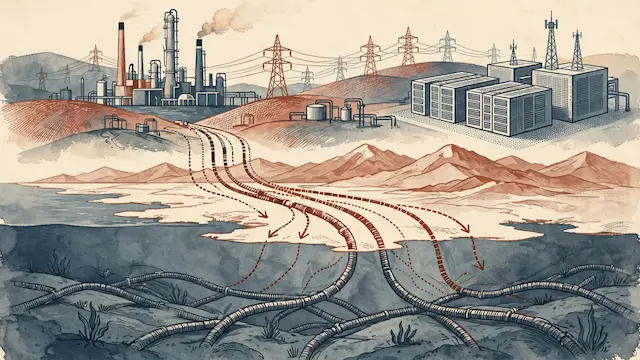
Nine months after the outbreak of war between Iran, the United States, and Israel, and with the fighting in a tense stalemate, Iran is signaling preparations for another round of attacks. Senior Revolutionary Guards officials have recently issued statements and threats indicating Tehran is readying a new arsenal and significantly expanding its target bank. These threats appear intended to deter U.S. President Donald Trump from resuming hostilities, but they also risk dragging the region into a wider escalation.
"The world will be amazed," stated Revolutionary Guards spokesperson Hossein Mohibi last month. "We have new targets that have not yet been attacked. Our war has not ended, and the Revolutionary Guards are ready for a long-term war." Among the new targets mentioned by Iran are underwater internet cables, regional server farms, and oil and gas facilities in the Middle East. This shift in Iranian military doctrine suggests a move from defense to preemptive offense, evidenced by recent Revolutionary Guards exercises involving the simultaneous launch of 30 ballistic missiles.
Farzin Nadimi, a senior researcher at the Washington Institute for Middle East Policy, believes that in a scenario of extreme escalation, Tehran might even target Europe with long-range missiles, including the U.S. Ramstein Air Base in Germany and bases in the UK. The threat to Europe is not purely theoretical; the U.S. military recently redeployed its long-range bombers from the UK to the U.S. amid an unspecified security threat, days after British authorities arrested suspects in an alleged Iranian plot against the base. Nadimi also suggests Iran may soon deploy AI-powered drone swarms capable of inter-drone communication and adaptive flight paths to evade air defenses and disrupt military satellite communications.
On the American side, preparations for escalation are also underway. CNN reported that White House advisors have discussed operational options against Iran, despite Trump's statements that the U.S. would not initiate new actions before the November midterm elections. U.S. officials cited by CNN last week revealed that the U.S. military has developed strike plans, including the potential use of the "mother of all bombs" against Iranian energy and nuclear facilities. Iranian army commander Alireza Sheik dismissed the U.S. threat as "propaganda intended to scare the Iranian people."
While both sides have declared victory in the current static phase of the war, Iran celebrating its regime's survival and the U.S. highlighting damage to Tehran, Iranian civilians are bracing for the worst. A 70-year-old Tehran resident told CNN, "Every day and every night, we wait for the bombing to start again." A mother of two described daily anxiety due to increased military presence in the capital, questioning the purpose of further conflict. The war, which began last February, saw the U.S. and Israel eliminate Iran's Supreme Leader Ali Khamenei and other senior figures. Iran responded with attacks on civilian infrastructure in neighboring Arab countries and launched over 2,500 missiles and drones toward the UAE, most of which were intercepted. A UAE official stated, "We don't want war, but if war starts today, we are ready to face any threat better than we were at the beginning of the year."
Mentioned




