
Israel Proposes Cutting Solar Subsidies Amid Falling Panel Prices
Translated & summarized from Calcalist by baba
Israel's Electricity Authority proposed reducing subsidies for low-voltage solar installations by about 5% annually, starting in 2027, due to falling global panel prices. The move aims to lower electricity tariffs and could impact the pace of new solar installations, though small home systems will be exempt from new competitive mechanisms. While subsidies are set to decrease, the total cost is expected to remain similar in 2027, with regulations lasting until 2047. Israel is currently falling short of its renewable energy targets.
The story in 6 lines · by baba
- Israel's Electricity Authority proposed reducing solar subsidies by 5% annually due to falling panel prices.
- The proposed changes aim to lower electricity tariffs and are set to begin in 2027.
- Subsidies for larger solar systems are slated to end in 2028, with support for smaller systems phasing out by 2030.
- Small home solar systems will be exempt from new competitive connection mechanisms.
- Israel is currently not meeting its renewable energy targets, with only 16.7% of electricity from renewables in 2025.
- The Authority also proposed ending support for paired energy storage systems, prioritizing larger grid-connected ones.
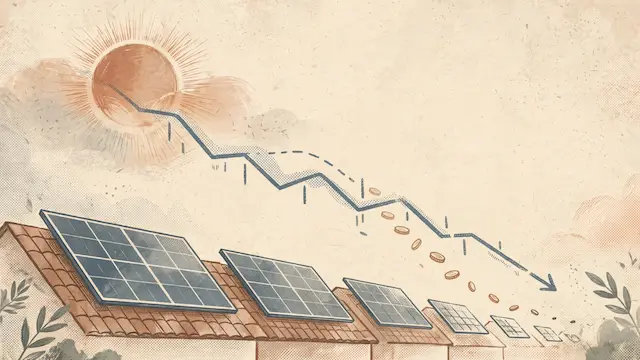
Israel's Electricity Authority has proposed a public hearing on reducing subsidies for low-voltage solar installations by approximately 5% annually. This move comes in response to a sharp global decline in solar panel prices, which have dropped by about 40% worldwide in the last four years, largely due to excess production, particularly from China. Currently, about 10% of electricity tariffs are allocated to supporting renewable energy, and the proposed subsidy reduction could lead to lower electricity rates. The Authority hopes that the number of solar installations on buildings will continue to grow despite the reduced subsidies, with the new regulations slated to take effect in 2027.
Low-voltage solar installations, typically photovoltaic panels on existing structures, are common on various buildings from private homes to factories. While the electricity generated is primarily used by the building itself, surplus power is fed into the grid. Previously, owners of small solar facilities enjoyed higher tariffs (28-48 agorot per kWh) compared to large, high-voltage installations (15-20 agorot per kWh) to encourage adoption on smaller structures. The new proposal gradually lowers these tariffs, aiming for 45.44 agorot per kWh for small systems (up to 15 kWh) by mid-2027 and 36.77 agorot by 2030. Subsidies for larger systems (520-630 kW) are proposed to end in 2028, with only smaller systems (up to 300 kW) receiving subsidies by 2030.
The total subsidy cost for all facilities is projected to remain around 150-180 million shekels in 2027, similar to current levels, with the regulatory period extending to the end of 2047. The reduction in subsidies could be more significant in areas where grid expansion requires development, as connection order will be determined by the tariff reduction rate. A competitive mechanism is set to begin in January 2028, though small home systems (up to 15 kW) will be exempt and connected without delay. Owners of larger systems (100 kW and above) can opt out of guaranteed tariffs and trade electricity on the free market, with the Authority proposing a premium of 10.64-16.82 agorot above market prices to incentivize this.
Furthermore, the Authority proposes ending support for energy storage systems (batteries) paired with solar panels, prioritizing large, high-voltage storage facilities. However, it acknowledges the economic viability of small storage systems alongside solar panels. Tariffs will be partially linked to USD and EUR exchange rates to reflect imported cell costs. Israel currently has 2,323 MW of low-voltage solar capacity, but despite subsidies, it is not meeting its renewable energy targets, with only 16.7% of electricity from renewables in 2025 against a 20% goal. The incentive reduction may slow the pace of rooftop solar installations.
The same event, reported separately by each outlet. Open a few to compare what different newsrooms emphasize — and what they leave out.
Other 3


Not the same event — other stories that share this one’s people, places, or theme: background, reactions, and follow-ups.
