
Israel's Post-Assad Syria Presence Sparks Local Resentment
Translated & summarized from Kan News by baba
Investigative journalist Elisabeth Tsurkov reports that Israel established outposts in Syria after the Assad regime's fall, leading to local resentment and economic harm. The Syrian regime reportedly silences detainees about mistreatment in Israel to avoid anti-Israel sentiment. Tsurkov claims Israel's presence is political, not security-driven, despite military acknowledgment. The article also touches on potential agreements and a past incident involving Netanyahu and A-Shar'a.
The story in 5 lines · by baba
- Israel established outposts in Syria after the Assad regime's fall, causing local anger and economic damage.
- Syrian detainees are allegedly instructed by their regime not to report mistreatment in Israel.
- Journalist Elisabeth Tsurkov claims Israel's Syria presence is political, not security-driven.
- Local Syrian public opinion has reportedly turned against Israel.
- The article references a past incident involving Netanyahu and A-Shar'a regarding Druze safety.
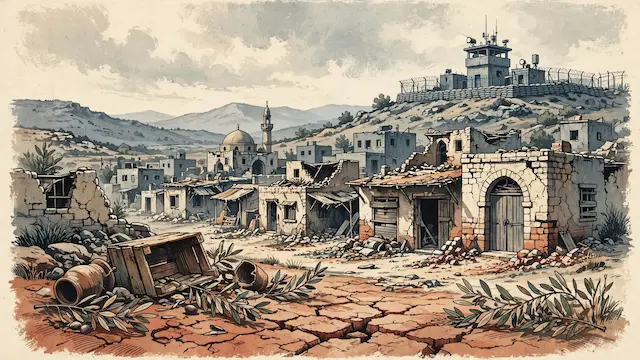
Following the collapse of the Assad regime, Israel established outposts in Syria's buffer zone to prevent instability along its border. Investigative journalist Elisabeth Tsurkov interviewed numerous Syrian civilians and Israeli soldiers, revealing widespread anger towards Israel and damage to local livelihoods. Tsurkov discovered that the Syrian regime instructed released detainees not to report torture or mistreatment in Israel, aiming to prevent public unrest against Israel. She asserts that Israel's continued presence in Syria is driven by political considerations, even though the military recognizes it offers no security benefit. Tsurkov discussed the shift in local Syrian public opinion regarding Israel, the potential for agreements between the two nations, and her own 903-day captivity in Iraq. The article also references a past event where Netanyahu stated that a conversation with A-Shar'a preceded the cessation of a massacre against Druze people.