
Netanyahu's Office Excludes Military Reporters From Security Briefing
Translated & summarized from Haaretz by baba
Prime Minister Benjamin Netanyahu's office excluded several prominent military reporters and commentators from a national security briefing in Jerusalem. In response, most invited journalists boycotted the event, with only one military correspondent attending. Excluded reporters criticized the move on social media, questioning the timing and the process behind the security concept presentation. The Prime Minister's office has not yet commented on the situation.
The story in 6 lines · by baba
- Prime Minister Benjamin Netanyahu's office excluded key military reporters from a national security briefing.
- Most invited military journalists boycotted the briefing in solidarity with their excluded colleagues.
- The excluded reporters criticized the timing of the briefing, which occurred ten days before elections.
- One military correspondent who attended called the absence of his colleagues a "huge miss."
- Journalists questioned the process and substance of the national security concept presented.
- The Prime Minister's office has not yet responded to the criticism.
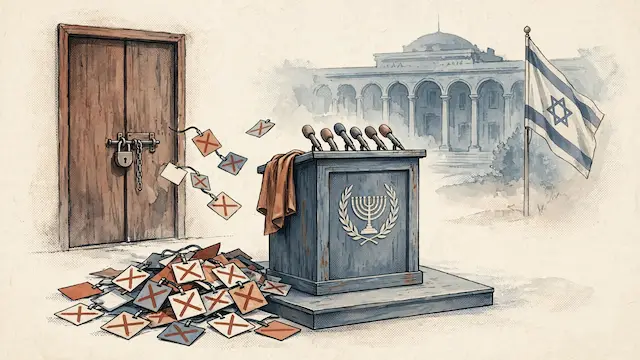
Prime Minister Benjamin Netanyahu's office excluded a number of military reporters and commentators from a briefing held Sunday in Jerusalem, where Netanyahu presented "Israel's National Security Concept." Among the journalists not invited were Or Heller (Channel 13), Carmela Menashe (Kan), Amos Harel and Yaniv Kubovich (Haaretz), Shai Levi (Mako), Doron Kadosh (Galei Tzahal), Avi Ashkenazi (Maariv), and Yishai Almokais (Makor Rishon).
Following the exclusion, nearly all invited military reporters and commentators decided not to attend the briefing. Those who boycotted included Ron Ben Yishai (Ynet), Itay Blumenthal and Roi Sharon (Kan News), Nitzan Shapira (Channel 12), and Amir Bar Shalom (Galei Tzahal). Only Amir Bohbot, a correspondent for Walla, attended the briefing, along with some political reporters.
During the briefing, Bohbot addressed Netanyahu, expressing regret over his colleagues' absence, calling it a "huge miss" and noting it hindered a comprehensive understanding of the security concept. Netanyahu responded by suggesting he might hold another briefing.
Journalists who were excluded, like Or Heller, criticized the move on social media, noting that Netanyahu had not met with the military press corps since October 7th. Heller questioned the timing, coming just ten days before elections, and raised concerns about the process of formulating the security concept, its presentation to the cabinet and security establishment, and the lack of a "red team" to challenge it. He also recalled Netanyahu's pre-war conviction regarding Gaza.
Other excluded journalists, such as Itay Blumenthal and Shai Levi, also voiced their objections online, with Levi calling such political briefings disguised as security updates unacceptable, especially after a three-and-a-half-year boycott by the Prime Minister's office. A response from the Prime Minister's office was not immediately available.
Mentioned
The same event, reported separately by each outlet. Open a few to compare what different newsrooms emphasize — and what they leave out.
Left 1Other 1

Not the same event — other stories that share this one’s people, places, or theme: background, reactions, and follow-ups.
