
Israeli Government Cuts Millions From Civilian Budgets for Urgent Defense Purchases
Translated & summarized from Kikar HaShabbat by baba
The Israeli government has approved significant budget cuts across all ministries to fund urgent defense procurement, prioritizing security over civilian services. The Ministry of Transportation faces the largest reduction, with education and national security also heavily impacted. An additional 0.5% budget cut from 2027 onwards is planned to fund trials for Hamas operatives. While supporters cite security imperatives, critics question the impact on essential services and the fairness of the cuts, especially with upcoming elections.
The story in 6 lines · by baba
- The Israeli government approved sweeping budget cuts across ministries to fund urgent defense procurement.
- The Ministry of Transportation will lose NIS 423 million, the Ministry of Education NIS 354 million, and the Ministry of National Security NIS 224 million.
- An additional 0.5% budget cut from 2027 onwards, totaling NIS 776 million, will fund trials for Hamas operatives.
- Requests for exemptions from the Ministries of Welfare and Health were denied.
- The decision prioritizes security needs over civilian services like education and transportation.
- Critics question the impact on social services and the fairness of the cuts, especially before elections.
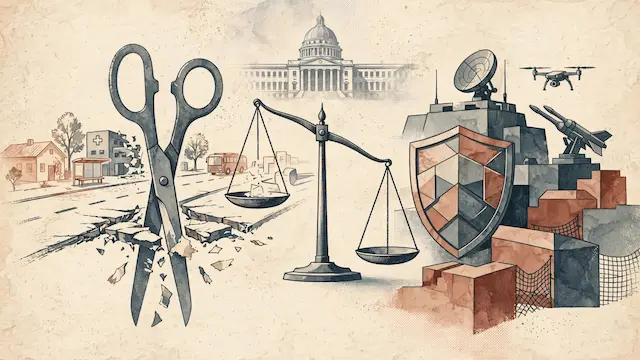
The Israeli government has approved a sharp, sweeping cut across all ministries to fund urgent defense procurement, prioritizing security needs over civilian services. The Ministry of Transportation will absorb the largest hit with a NIS 423 million reduction, followed by the Ministry of Education at NIS 354 million, and the Ministry of National Security at NIS 224 million. Requests for exemptions from the Ministry of Welfare and the Ministry of Health were denied, with all ministries contributing to the cuts.
In addition to the immediate cuts, the government plans a further 0.5% reduction from the 2027 budget, totaling approximately NIS 776 million. This funding is earmarked for infrastructure and guards for the trials of Hamas operatives involved in the October 7th massacre. The decision comes amid significant pressure from the defense establishment for immediate, non-negotiable procurement.
Concerns have been raised by officials in affected ministries about the potential impact on programs, classrooms, and student support in education, as well as infrastructure development in transportation. The cut to the Ministry of National Security, responsible for internal security, to fund external defense has been described as paradoxical. The rejection of exemptions for welfare and health deepens the perception that vulnerable populations and basic services will bear the brunt of the austerity.
Supporters of the measure emphasize Israel's complex security reality, arguing that urgent procurement is a necessity, not a luxury. They also view the preparations for the "Nukhba" operatives' trials as a crucial step in ensuring justice and sending a message. They contend that the sweeping cut is the most efficient and rapid way to secure the required resources without a full budget renegotiation. The decision highlights the ongoing tension between security demands and civilian needs, raising questions about transparency, long-term priorities, and the fairness of the cutting process, which appears equitable but has unequal consequences.
This move follows recent financial decisions, including the Finance Minister's announcement of further fuel price subsidies, costing the state approximately NIS 300 million monthly, and a High Court of Justice order in May to halt funding for Haredi institutions not teaching core subjects, totaling NIS 98 million. The practical effects of the current cuts on transportation projects, educational programs, and the ability of welfare and health systems to maintain services will become clearer in the coming days, but the government's message is that urgent defense needs require universal contribution.


