
IDF Marks Two Years Since Yahya Sinwar's Killing in Gaza
Translated & summarized from Maariv by baba
The IDF is marking two years since the killing of Hamas leader Yahya Sinwar in Gaza. Sinwar, a key figure in Hamas's military buildup, was killed in an accidental encounter in Rafah two years ago. His death has had a significant impact on Hamas's decision-making, coordination, and operational capabilities, according to IDF analysis.
The story in 6 lines · by baba
- The IDF is marking two years since the killing of Hamas leader Yahya Sinwar in Gaza.
- Sinwar was a central figure in Hamas's military and operational strategy in Gaza.
- He was killed in an accidental encounter in the Tel Sultan neighborhood of Rafah.
- The operation involved an initial identification of militants, followed by a pursuit and engagement.
- IDF analysis indicates Sinwar's death has significantly impacted Hamas's operations and leadership.
- His absence has led to challenges in decision-making, coordination, and organizational cohesion.
The Israel Defense Forces (IDF) are marking two years since the killing of Yahya Sinwar, the former leader of Hamas in the Gaza Strip. The IDF is analyzing the impact of his death on Hamas's operations and the ongoing conflict, noting that it has significantly affected the organization.
Sinwar was a key architect of Hamas's military and operational strategy in Gaza. After his release from prison, he played a central role in building the group's strength and operational readiness. In 2017, he became the leader of Hamas in Gaza, spearheading the organization's armament, strengthening its military infrastructure, and preparing for a large-scale conflict with Israel.
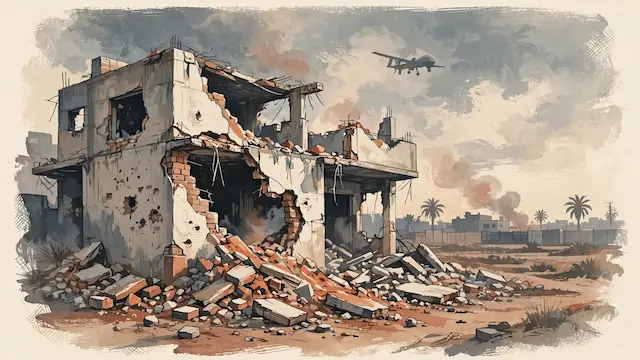
The operation that led to Sinwar's death occurred in the Tel Sultan neighborhood of Rafah. An observation unit identified three militants, one of whom was later identified as Sinwar, approximately 300 meters from an ongoing engineering operation. When the militants were spotted, IDF forces, including tanks and drones, moved to intercept them. During the initial engagement, a soldier from Battalion 450 was seriously wounded. Sinwar and the other two militants fled and split up, with Sinwar seeking refuge in a separate building.
Following Sinwar's escape into a building, a paratrooper company entered to search the structure. After discovering signs of blood, indicating a militant was nearby, the soldiers were attacked with grenades. The IDF forces responded with heavy fire, including tank shells and machine guns, leading to the militant's death. A drone later confirmed a body inside the building, which was identified the following day as Yahya Sinwar.
Israeli analysis suggests Sinwar's death was a turning point for Hamas. In the short term, his absence impacted decision-making and coordination within the organization. In the longer term, the IDF observes changes in the military wing's operational patterns, leadership gaps, diminished command capabilities, and difficulties in maintaining organizational cohesion.
The same event, reported separately by each outlet. Open a few to compare what different newsrooms emphasize — and what they leave out.
Centre 3Right 2Haredi 1





Not the same event — other stories that share this one’s people, places, or theme: background, reactions, and follow-ups.



