
Israel Approves Apache Helicopter Deal, Funds Cut From Arab Community Programs
Translated & summarized from Calcalist by baba
Israel's government approved a NIS 1 billion budget cut, primarily from programs for the Arab community, to fund the purchase of 12 Apache helicopters from Boeing. The payment restructuring by Boeing necessitated finding new funding sources, as the Ministry of Defense was already over budget. The Treasury insisted on a concrete funding source, leading to the controversial cuts from future budgets. The ongoing dispute between the Treasury and the Ministry of Defense over defense spending and its funding remains unresolved, with a decision likely postponed to the next government.
The story in 6 lines · by baba
- Israel approved a NIS 1 billion budget cut from Arab community programs to fund 12 Apache helicopters.
- The funding is needed due to Boeing's revised payment terms for the helicopter deal.
- The budget cuts target future years (2027-2029) whose budgets have not yet been approved.
- The Treasury insisted on a concrete funding source, rejecting the Defense Ministry's proposed offsets.
- The decision highlights an ongoing dispute between the Treasury and Ministry of Defense over defense spending.
- Leadership has avoided a final decision, likely deferring it to the next government.
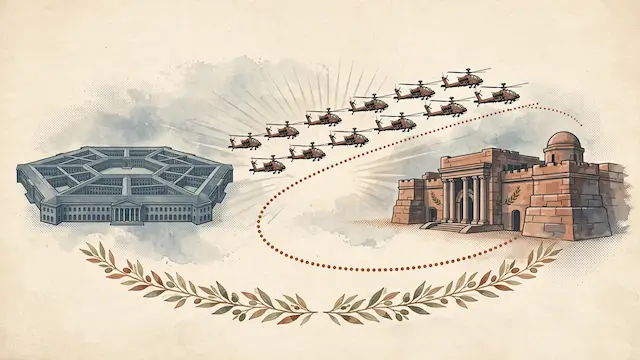
The Israeli government has approved a NIS 1 billion cut to fund the purchase of 12 Apache helicopters from Boeing. The deal, finalized yesterday, will see the helicopters arrive in a few years, but payments begin immediately. The ministerial committee for equipping had previously approved the purchase and identified funding sources.
However, the Ministry of Defense faced difficulties negotiating payment terms with Boeing. In early August, the defense establishment announced a need to restructure payments, increasing the cost by approximately NIS 1 billion over the next four years. The Ministry of Defense initially suggested that the deal was jeopardized by the Treasury's stance.
The approved budget cut, totaling NIS 1 billion over four years, will primarily impact the five-year plan for the Arab community. Specific amounts include NIS 169 million in 2027, NIS 342 million in 2028, and NIS 453 million in 2029. These future budgets have not yet been approved, raising questions about the feasibility of cutting funds from them.
The mechanism for this is a 2015 law requiring a three-year budget plan, known as the Numerator. This plan outlines projected government expenses and revenues, ensuring commitments adhere to budget limits. If commitments exceed these limits, the government cannot make further future commitments without identifying specific funding. This creates a situation where future commitments are constrained even before budgets are approved and may change.
The Treasury's legal advisor, Dudi Kofel, ruled that budget cuts cannot be considered a funding source while the Ministry of Defense is already over budget. Therefore, the government had to identify a concrete source, leading to the cuts from the Arab community's five-year plan. Some in the defense establishment view this as an "Israeli-bluff or Treasury trick and a political spin," suggesting that Finance Minister Smotrich may gain politically and that the cuts might not be fully realized by future governments.
Despite criticism that the situation is absurd, with the defense establishment struggling to acquire essential equipment due to constraints on unapproved future budgets, the Numerator is seen as a necessary tool to remind the government of limited resources. However, the ongoing dispute between the Treasury and the Ministry of Defense, which has persisted for too long, highlights a lack of decisive leadership from Prime Minister Netanyahu and Smotrich. This indecision is expected to be deferred to the next government, with the public ultimately bearing the cost of this leadership vacuum.
The same event, reported separately by each outlet. Open a few to compare what different newsrooms emphasize — and what they leave out.
Centre 7Right 5Haredi 2Arab 1Other 6
























Not the same event — other stories that share this one’s people, places, or theme: background, reactions, and follow-ups.



