
Israel to Acquire 12 Apache Attack Helicopters from US
Translated & summarized from Hamal by baba
Israel's Ministry of Defense will purchase 12 Apache "Echo" model helicopters from the U.S. after overcoming budget challenges and missed deadlines. Director General Amir Baram highlighted the deal's success through creative solutions and strong U.S. ties. The acquisition involves a NIS 1 billion budget adjustment from future years to bridge a significant defense deficit. The Israeli Air Force requires these advanced helicopters, which can carry up to 16 missiles and counter drones, to compensate for shortages and extend the life of older models.
The story in 5 lines · by baba
- Israel will purchase 12 "Echo" model Apache attack helicopters from the U.S.
- The deal was finalized after overcoming budget constraints and missed deadlines.
- A NIS 1 billion budget adjustment from future years is facilitating the acquisition.
- The new helicopters will have advanced capabilities, including carrying up to 16 missiles.
- Older "Patan" model helicopters will have their service life extended due to shortages.
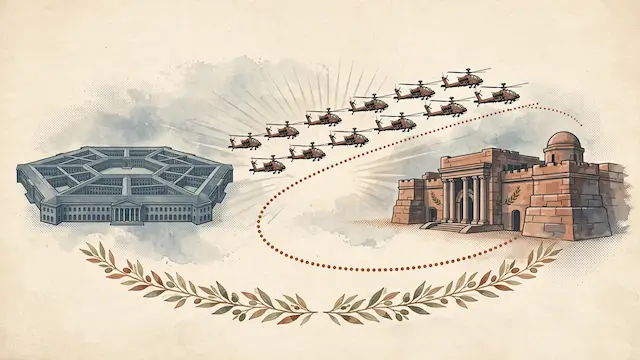
Israel's Ministry of Defense will purchase 12 "Echo" model Apache attack helicopters from the United States, following government approval on Wednesday. Director General of the Ministry of Defense, Major General (Res.) Amir Baram, instructed the ministry's delegation in the U.S. to finalize the deal with the Pentagon. Baram stated that the agreement was made possible through "creative solutions" with American partners that bridged budget gaps and addressed complex financial constraints without compromising operational needs, reflecting the "deep strategic relationship and mutual commitment to Israel's security."
Last week, it was reported that Israel had missed the deadline to sign the contract with the U.S. Department of Defense. Security officials indicated that the IDF and the Ministry of Defense face a severe budget deficit of NIS 40 billion in 2026, emphasizing the urgent need for funds despite a prior agreement with the Prime Minister in June. A government-approved cut of approximately NIS 1 billion from future budgets is intended to facilitate the Apache deal, even though the final deadline had passed after four extensions granted by the U.S. government.
These funds for the helicopter acquisition will come from deferring payments on other defense contracts. The budget cut is described as a technical accounting procedure required by the Treasury to enable the deal. The defense establishment continues to warn about the significant budget shortfall for 2026 and future force-building budgets, which remain unresolved despite agreements and directives.
Prior to October 7, the IDF had considered closing a combat helicopter squadron due to budget issues and the anticipated role of armed unmanned aerial vehicles. However, following the Hamas attack, the Ministry of Defense urgently sought to procure additional combat helicopters, allocating $1 billion. This funding was later diverted to other needs while searching for suitable helicopters that met the Air Force's standards. Although U.S. approval was eventually obtained to purchase the helicopters, Israel's budget for them was no longer available. An American proposal for Israel to receive a loan was rejected.
Ministry of Defense representatives are now working to secure renewed U.S. approval for the sale, as other countries are also interested in acquiring combat helicopters, and Boeing's production line capacity is limited. The Israeli Air Force aims to acquire the "Echo Block 6.5" model, capable of carrying up to 16 missiles, with capabilities against unmanned aerial vehicles, a powerful radar, advanced self-defense, and an open architecture for Israeli systems. Due to severe shortages and procurement delays, the Air Force has been forced to extend the service life of its 45-year-old "Patan" model helicopters to meet operational needs, particularly along the country's borders and in special operations.
Mentioned
The same event, reported separately by each outlet. Open a few to compare what different newsrooms emphasize — and what they leave out.
Centre 6Right 5Haredi 2Arab 1Other 4





















Not the same event — other stories that share this one’s people, places, or theme: background, reactions, and follow-ups.



