
Customs Officers Seize 300 Plants Smuggled From Thailand at Ben Airport
Translated & summarized from Davar by baba
The traveler, a doctor, claimed the plants were for his personal garden. The confiscated plants pose a significant risk of introducing devastating pests and diseases to Israel's agriculture, particularly its banana industry. Legal proceedings have been initiated against the traveler, and authorities are warning the public against illegally importing plant material.
The story in 4 lines · by baba
- The traveler, a doctor, claimed the plants were for his personal garden hobby.
- The confiscated plants pose a severe risk of introducing pests and diseases to Israel's agriculture.
- Israel's banana industry is particularly vulnerable to diseases like Panama disease and ToBRFV virus.
- The smuggler faces legal proceedings, fines, and potential criminal charges under the Plant Protection Law.
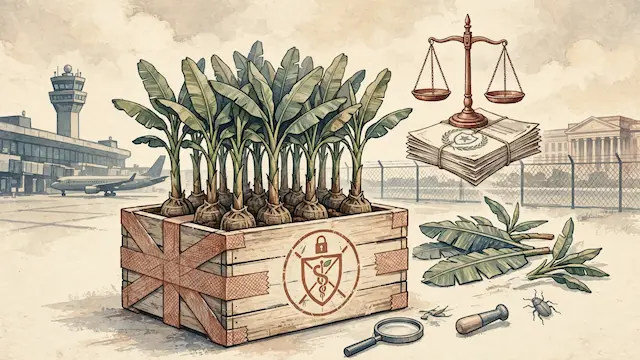
The traveler, identified as a doctor residing in central Israel, claimed that collecting exotic ornamental plants is a personal hobby and that the saplings were intended for his private garden, which he described as a "jungle." He is currently under investigation by customs authorities, and legal proceedings have been initiated against him. The seized plants were confiscated by inspectors from the Ministry of Agriculture and Rural Development's Plant Protection and Inspection Services.
Shlomit Tzioni, director of the Plant Protection and Inspection Services, issued a warning about the significant risks posed by even small plants, fruits, or vegetables brought into Israel without a license. She emphasized that such items can carry pests and diseases not present in Israel, potentially causing irreversible damage to agriculture and the environment, and threatening entire agricultural sectors. Tzioni urged the public to act responsibly and refrain from bringing plant material into the country without the necessary permits.
The Ministry of Agriculture highlighted the particular danger to Israel's banana plantations, which are highly susceptible to diseases. The introduction of infected banana plants could lead to the destruction of the entire Israeli banana industry. Thailand, specifically, harbors pests and pathogens absent in Israel, posing a severe threat to local banana cultivation, potentially jeopardizing its very existence. Israeli banana growers are especially concerned about the potential introduction of Panama disease, a destructive soil fungus with no known cure that can devastate entire plantations worldwide and survive in soil for decades.
Another significant risk is the introduction of the ToBRFV virus, which stunts banana growth and deforms leaves, rendering plantations unproductive and leading to their destruction. Smuggling plants without permits also increases the likelihood of introducing new pests, such as hidden aphids and insects currently not found in Israel. The arrival of new pests or diseases forces farmers to invest heavily in chemical pesticides, negatively impacting fruit quality, causing severe environmental damage to soil and groundwater, and increasing public exposure to toxins.
Under the Plant Protection Law, any fruit, vegetable, or sapling brought into Israel without inspection at border crossings or airports will be immediately confiscated and destroyed. The smuggler faces detention, investigation, substantial fines, and potentially criminal charges.
Mentioned









