
Massive Overhaul of Tel Aviv Savidor Central Station to Include Extensive Urban Development
Translated & summarized from Israel Hayom by baba
A plan to transform Tel Aviv's Savidor Central Station into a massive integrated transportation hub and urban development center has been recommended for public review. The project, spanning 260 dunams, will connect multiple transit lines including metro, light rail, and trains, while adding 700,000 square meters for commercial and residential use. Extensive roofing over the Ayalon Highway will create new public green spaces, aiming to reconnect Tel Aviv, Ramat Gan, and Givatayim. The plan prioritizes public transport, pedestrians, and cyclists, with subterranean stations for light rail and buses.
The story in 6 lines · by baba
- Savidor Central Station in Tel Aviv is slated for a major transformation into an integrated transport hub and urban development center.
- The plan includes roofing over the Ayalon Highway to create public green spaces and reconnect Tel Aviv, Ramat Gan, and Givatayim.
- The complex will directly connect metro, light rail, and train lines, with underground stations for the Purple Line and bus terminal.
- Approximately 700,000 square meters will be developed for employment, commerce, hotels, and residences.
- The project aims to prioritize public transport, pedestrians, and cyclists, reducing private vehicle traffic.
- The plan is part of a larger national metro initiative for the Gush Dan region.
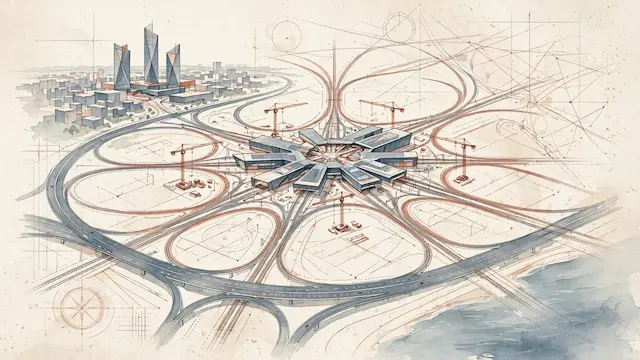
A major transformation is planned for Tel Aviv's Savidor Central Station, aiming to create an integrated transportation hub and foster urban development. The National Council for Planning and Construction's Committee for Principal Planning Issues (Valnat'a) has recommended that the public review a plan to establish the Savidor Integrated Transportation Complex (Mat'am). This complex will span approximately 260 dunams at the junction of Tel Aviv, Ramat Gan, and Givatayim, and is projected to serve between 55,000 and 80,000 passengers during peak morning hours. The plan, promoted by NTA Metropolitan Mass Transit System Ltd. and designed by HQ Architects, includes the development of around 700,000 square meters for employment, commerce, hotels, and residences, in addition to transportation infrastructure.
A significant feature of the plan is the extensive roofing over the Ayalon Highway and railway lines, creating green spaces and public areas at street level. This aims to reconnect the three neighboring cities, which have been historically separated by the infrastructure. The complex will house a central passenger hall directly connecting the M1 metro line, the Red and Purple light rail lines, the existing Israel Railways station, and future high-speed rail lines.
As part of the project, the Purple Line's terminal station will be moved underground, above the metro station, and the electric bus terminal will also be fully subterranean. The freed-up areas will be dedicated to pedestrian zones, a large underground bicycle parking facility, and a continuous network of paths forming a "metropolitan green axis." This initiative is part of the national metro plan for the Gush Dan region.
The plan also entails substantial changes to surrounding traffic, including the cancellation of the southbound Ayalon Highway ramp from Ha'Shalom interchange, reduced private vehicle traffic in favor of public transport lanes, and a priority for pedestrians and cyclists. Rafi Elmaliach, Director General of the Planning Administration, stated that the administration continues to advance plans that encourage public transport use alongside increased construction in strategic development areas, viewing transportation infrastructure as an opportunity for urban development. Yael Solomon, Deputy Director General for Infrastructure at the Planning Administration, emphasized the complex's importance for creating a reliable and efficient public transport network in the metropolis, designed with the passenger experience at its core.
Valnat'a has set conditions for the plan's deposit, including full coordination with Tel Aviv's master plan, the creation of shaded and short passages to prevent bottlenecks, and linking some construction and commercial rights to the actual progress of railway line construction.
Mentioned
The same event, reported separately by each outlet. Open a few to compare what different newsrooms emphasize — and what they leave out.
Centre 1Right 2Other 2




Not the same event — other stories that share this one’s people, places, or theme: background, reactions, and follow-ups.
