
Major Transport Hub Project Approved for Tel Aviv's Savidor Center
Translated & summarized from Ice by baba
Israel's National Planning and Construction Council has recommended advancing the Tel Aviv Central-Savidor Integrated Transport Hub project, which will become the country's busiest transport center. The plan includes 700,000 square meters for mixed-use development and will integrate multiple transit lines, including metro, light rail, and high-speed rail. The project aims to improve passenger experience and urban development by moving bus terminals underground and creating new public spaces. This initiative is part of a larger government plan to develop seven integrated transport hubs across the country.
The story in 6 lines · by baba
- The Tel Aviv Central-Savidor Integrated Transport Hub project has been recommended for public review, aiming to become Israel's busiest transport center.
- The project will feature 700,000 square meters of mixed-use development including employment, commerce, hotels, and residences.
- It will create a major transit nexus connecting metro, light rail, existing and future high-speed rail, and underground bus terminals.
- The plan includes covering parts of the Ayalon highway to improve pedestrian and cyclist connectivity between Tel Aviv, Ramat Gan, and Givatayim.
- Savidor Center is one of seven integrated transport hubs being developed as part of Israel's national metro system initiative.
- The project is expected to handle approximately 55,000 people during peak morning hours.
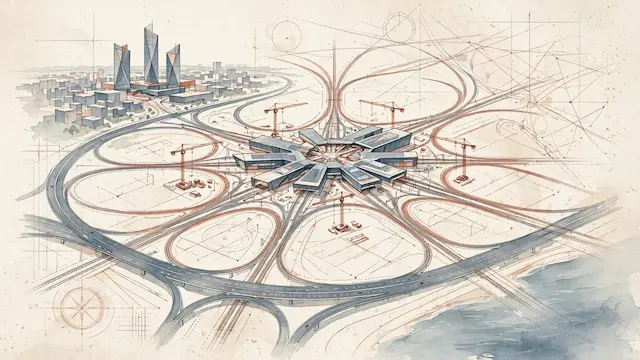
A significant step has been taken towards a transportation revolution in the Tel Aviv metropolitan area with the advancement of the Tel Aviv Central-Savidor Integrated Transport Hub project. The National Planning and Construction Council's Committee on Fundamental Planning Issues, chaired by Rafi Almaliach, Director General of the Planning Administration, has recommended that the National Planning and Construction Board publish the plan for public review. This massive project aims to transform Savidor Center into Israel's primary and busiest integrated transport hub, projected to handle approximately 55,000 people during peak morning hours. The development encompasses around 700,000 square meters designated for employment, commerce, hotels, and residences, alongside public plazas and new pedestrian paths. Located strategically at the intersection of Tel Aviv, Ramat Gan, and Givatayim, near the Stock Exchange complex, the Kirya, and Midtown, the project is being advanced by NTA (Metropolitan Mass Transit System Ltd.) and designed by HQ Architects. Key innovations include a direct connection between the M1 metro line, the Red and Purple light rail lines, the existing Israel Railways station, and the future high-speed rail station. The entire electric bus terminal will be moved underground, freeing up street-level space for urban development, and the Purple Line's terminal station will also be relocated underground. The plan also involves covering additional areas over the Ayalon highway, facilitating seamless pedestrian and cyclist movement between the cities and reducing the physical divide. Savidor Center is one of seven integrated transport hubs being promoted under National Outline Plan 65, supporting the government's metro system initiative. Other planned hubs include those in Glilot, HaShalom, HaHagana, Ma'arav Ben Zvi, Kfar Ganim, and Yoseftal. Almaliach stated that transport infrastructure should be viewed as an opportunity for urban development integrated into the urban fabric, a vision he believes Savidor Center exemplifies. Yael Solomon, Deputy Director General for Infrastructure at the Planning Administration, added that the hub is designed with the passenger experience at its core and that its significant building integration greatly contributes to the Tel Aviv metropolitan area's development momentum.
Mentioned
The same event, reported separately by each outlet. Open a few to compare what different newsrooms emphasize — and what they leave out.
Centre 1Right 2Other 2




Not the same event — other stories that share this one’s people, places, or theme: background, reactions, and follow-ups.
