Negev Home Demolitions Surge, New Village Faces Threat
Translated & summarized from Al-Shams by baba
Suleiman Al-Huwaishla, director of the Regional Council for the Unrecognized Villages in the Negev, warned of escalating home demolitions, citing the destruction of 50 homes in Al-Dahia and potential demolitions in Abu Qrenat. He believes the timing is politically motivated, linked to National Security Minister Itamar Ben-Gvir's election campaign. Official data indicates nearly 2,800 homes have been demolished since the current government took office, with projections of further destruction. Al-Huwaishla urged increased public action and participation in the upcoming elections.
The story in 6 lines · by baba
- Nearly 2,800 homes demolished in the Negev since the current government took office, impacting thousands.
- Director Suleiman Al-Huwaishla warns of escalating demolitions, linking them to political motives and upcoming elections.
- Official data shows over 14,200 structures, including 2,155 homes, demolished between 2023 and mid-October.
- Relocation forces Bedouin families to abandon traditional livelihoods and adapt to urban environments.
- Al-Huwaishla calls for increased public mobilization and participation in the October 27th elections.
- Estimated direct financial loss per demolished home is 100,000 shekels, totaling 280 million shekels since 2023.
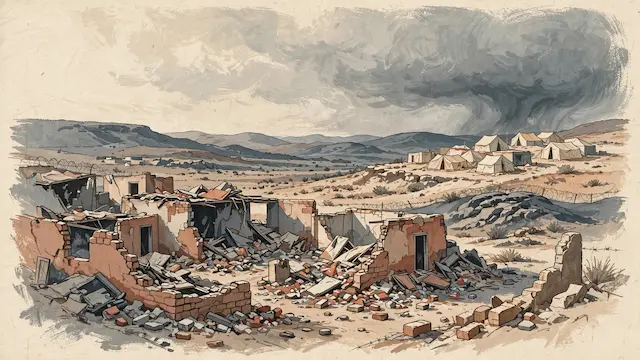
Suleiman Al-Huwaishla, director of the Regional Council for the Unrecognized Villages in the Negev, has warned of escalating home demolitions in the Negev region, particularly as elections approach. He highlighted recent demolitions in the village of Al-Dahia, north of Rahat, where approximately 50 homes were destroyed, and expressed concern over preparations for further demolitions in Abu Qrenat village. Al-Huwaishla described the events in Al-Dahia as a humanitarian catastrophe and suggested the timing of these operations indicates a connection to the election campaign of National Security Minister Itamar Ben-Gvir. He noted that demolition orders may have existed for years but are activated strategically. These demolitions are not confined to the Negev but are occurring in other areas of Israel as well, raising fears of displacement and loss of livelihoods for affected families.
The impact of these demolitions extends beyond the loss of shelter, forcing families to relocate to towns like Rahat, Shaqib al-Salam, and Kseife, or to rent homes in Jewish cities such as Beersheba, Dimona, and Arad. Al-Huwaishla explained that such moves disrupt the traditional Bedouin lifestyle, especially for those reliant on livestock and grazing for income, compelling them to find alternative livelihoods and adapt to unfamiliar environments. This displacement creates cumulative social and economic challenges.
Official data cited by Al-Huwaishla indicates that around 13,000 individuals have lost their homes during the current government's term. More detailed figures from the Southern Enforcement Directorate for 2023-2025 show the demolition of approximately 14,200 structures, including 2,155 residential homes. Projections suggest a similar demolition rate for 2026, potentially adding another 870 homes to the total. As of mid-October, nearly 2,800 homes have been demolished since the current government took office.
The financial cost of these demolitions is significant, with the direct financial loss for a tin-roofed home estimated at 100,000 shekels, encompassing legal fees, demolition costs, and alternative housing. This amounts to cumulative damages estimated at 280 million shekels since early 2023. In response to the ongoing demolitions, Al-Huwaishla called for increased public mobilization and urged Arab citizens to participate in the upcoming elections on October 27th as a means to counter the current government's policies.
Mentioned