
Homes Demolished in Negev Village, Residents Face Homelessness
Translated & summarized from Davar by baba
Demolitions began Monday in the Abu Wadi neighborhood of Dahaya al-Naqab in the northern Negev, displacing around 400 people. Residents described the destruction of their homes as catastrophic, with many unable to find immediate alternative housing. The Mayor of Rahat condemned the demolitions as a crime and questioned the government's housing policies for the displaced Bedouin population. The Bedouin Authority plans to relocate residents to a new neighborhood in Rahat, but immediate solutions are needed.
The story in 6 lines · by baba
- Approximately 400 people face homelessness after home demolitions in the Abu Wadi neighborhood of Dahaya al-Naqab.
- Residents began dismantling their own homes in preparation for Monday's demolitions.
- A resident described destroying his home as "catastrophic" and "the hardest day of my life."
- The Mayor of Rahat called the demolitions a "crime" and criticized Israeli government policy.
- The Bedouin Authority plans to relocate residents to a new neighborhood in Rahat.
- Displaced residents are struggling to find affordable rental housing in nearby cities.
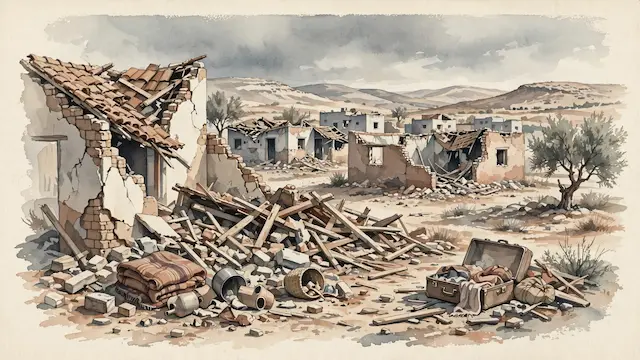
Demolitions began Monday morning in the Abu Wadi neighborhood of Dahaya al-Naqab in the northern Negev, with approximately 400 people expected to lose their homes by the end of the day. Residents had prepared for the demolitions, with some beginning to dismantle their own homes on Sunday. Ahmad Abu Wadi, a 50-year-old resident born in the neighborhood, described the experience of destroying his own home as "catastrophic" and "the hardest day of my life." His family owned 630 dunams, much of which was used for agriculture until recent years, when the Israel Land Authority allegedly altered the land, making it unusable for farming. The Bedouin Authority plans to relocate residents to neighborhood 10 in Rahat, where new housing is to be built. However, Abu Wadi and others need immediate housing solutions and have been unable to find affordable rentals in Rahat or Beersheba due to high prices. He expressed concern that residents living below the poverty line would be forced to seek shelter in makeshift structures.
Abu Wadi, father to seven-year-old twins, shared his helplessness when his daughters asked why their home was being destroyed and if he could not negotiate with the authorities. The Mayor of Rahat, Talal Al-Krinawi, visited the site and called the demolitions a "crime on the forehead of the Israeli government." He stated that destroying 80 homes and leaving 380 people without shelter, including 200 students returning to school in Rahat, was unacceptable. Al-Krinawi questioned why residents could not be allowed to live in the nearby, statutorily approved Al-Kauthar neighborhood, suggesting the policy was to house families from other areas instead. He asserted that residents were being pushed to the brink and asked what was expected of them, emphasizing their opposition to violence.
Mentioned
The same event, reported separately by each outlet. Open a few to compare what different newsrooms emphasize — and what they leave out.
Left 2Arab 1


Not the same event — other stories that share this one’s people, places, or theme: background, reactions, and follow-ups.



