
Israel Demolishes Homes of 250 Bedouins Near Rahat Amid Housing Dispute
Translated & summarized from Haaretz by baba
Israeli forces began demolishing homes of approximately 250 Bedouins from the Abu Wadi clan near Rahat on Monday, despite ongoing negotiations for alternative housing. The Beersheba District Court rejected the clan's request for a delay, allowing the state to proceed with the demolitions. Residents have been forced to dismantle their own homes to avoid costs, while the state continues demolitions at a high rate. The clan argues the proposed housing solutions are inadequate and potentially dangerous, leading to a legal battle over their future.
The story in 6 lines · by baba
- Israeli forces began demolishing homes of about 250 Bedouins from the Abu Wadi clan near Rahat on Monday.
- The Beersheba District Court rejected the clan's request to delay the demolitions, allowing the state to proceed.
- Residents started demolishing their own homes to avoid costs, as negotiations for alternative housing continue.
- The Abu Wadi clan claims the state is demolishing their homes without providing adequate or safe alternative housing.
- The clan has a pending ownership claim for about 600 dunams in the area, which is still being processed.
- The clan's attorney raised concerns about insufficient housing plots and potential conflict with the Rahat municipality.
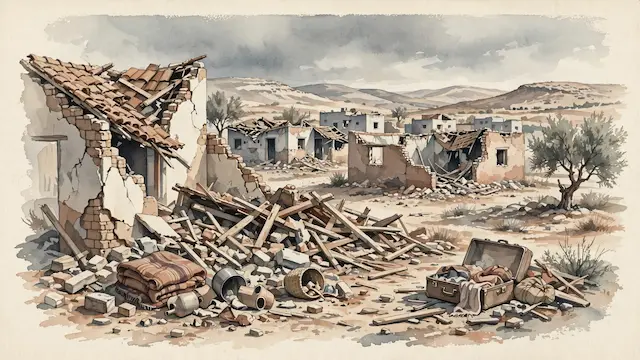
Israeli enforcement forces began demolishing the homes of approximately 250 members of the Abu Wadi clan near Rahat on Monday. The clan has resided in the area for decades, but housing alternatives have not yet been arranged, and negotiations with the Bedouin Development and Settlement Authority are ongoing. The Beersheba District Court rejected the clan's request to delay the demolitions, ruling that the state is permitted to enforce the demolition orders.
Residents began evacuating their belongings and demolishing their homes themselves on Sunday to avoid demolition costs. The government has been demolishing unrecognized Bedouin villages at an unprecedented rate since its current term began. Many residents of previously demolished villages have been left living in tents without agreements for new housing.
The Abu Wadi clan claims that in their case, the state is proceeding with demolition without providing available alternative housing. Ahmad Abu Wadi, who was born and raised in the village, described the demolition as catastrophic and the hardest day of his life. He noted that even a mosque built in 2000 is slated for demolition. He stated that the state prevented residents from accessing water and developing agriculture, later claiming the land was not theirs.
The clan, comprising about 250 people in 50 households, has a pending ownership claim for approximately 600 dunams in the area. A lower court had previously granted the state's request for demolition orders, setting an October 2026 deadline for the residents to find housing solutions. The clan requested a delay, arguing that the alternative housing offered in Rahat's Compound 10 was unsafe and potentially conflict-ridden, with some plots occupied by another tribe. They also claimed the Rahat municipality opposed their settlement there and that infrastructure development was incomplete.
The clan proposed the Al-Kauthar neighborhood as an alternative, which has an approved plan for 1,300 housing units. They claimed the Rahat municipality supported this plan and that they had good neighborly relations with the tribe originally designated for the area. Despite meetings with authority officials and offers to drop their land claim, the authority stated Al-Kauthar is designated for other Bedouin populations and its development is not yet approved. The authority also disputed the number of eligible residents, estimating about 60 instead of the clan's 130.
The Beersheba District Court ultimately dismissed the clan's request for a delay, with Judge Ido Kafkfi stating there was no legal basis for further postponement and that the demolition orders were final. The clan's attorney, Eli Ben Zaken, expressed concerns about the proposed housing solutions, citing a significant shortfall in available plots and potential conflict with the Rahat municipality's stance on accepting new residents.
Mentioned
The same event, reported separately by each outlet. Open a few to compare what different newsrooms emphasize — and what they leave out.
Left 2Arab 1


Not the same event — other stories that share this one’s people, places, or theme: background, reactions, and follow-ups.



