
Questions Arise After Fatal Unexploded Ordnance Incident in Northern Israel
Translated & summarized from N12 by baba
A 15-year-old boy was killed and 20 injured by unexploded ordnance during a school trip in northern Israel, prompting questions about safety and clearance protocols. Authorities are investigating whether the area was scanned for UXO before reopening to hikers after years of conflict. The incident highlights concerns about transparency regarding trail safety and past reports of deficiencies in UXO removal.
The story in 6 lines · by baba
- A 15-year-old boy died and 20 were injured by unexploded ordnance during a school trip in northern Israel.
- Questions are being raised about whether the area was scanned for UXO before being reopened to the public.
- The incident occurred on a popular hiking trail that experienced significant rocket fire during recent conflict.
- School trip safety procedures, including route approval and student briefings, are under review.
- Past state comptroller reports have identified shortcomings in the UXO clearance process.
- Hikers are advised to stay on marked trails and report suspicious objects.
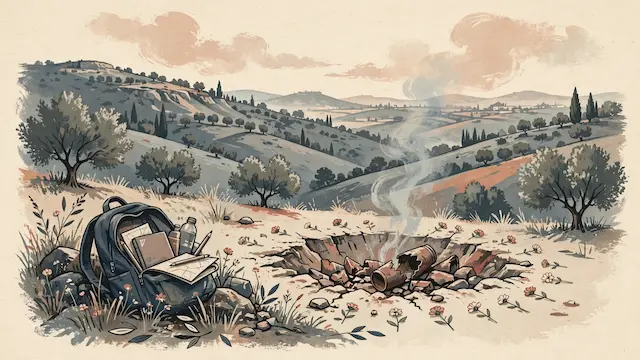
A tragic incident in northern Israel, where a 15-year-old boy was killed and approximately 20 others injured by an unexploded ordnance (UXO) during a school trip near Mitzpe Pe'er, has raised critical questions about safety protocols and the clearance of hazardous materials.
The event occurred on a popular hiking trail in the region, which had been subjected to extensive Hezbollah rocket fire during three years of conflict. With hikers returning to the area, authorities are now tasked with determining if the site was properly scanned for UXO before being reopened to the public and who bears responsibility for ensuring the safety of these routes.
Following previous ceasefires, both the Israel Nature and Parks Authority and the Jewish National Fund announced efforts to map and secure trails. The IDF also reported clearing UXO from numerous northern communities. However, it remains unclear if the specific location of the explosion was examined, when the last scan took place, and by whom. The safety procedures for school trips, including route approval, student briefings on not touching suspicious objects, and staying on marked paths, are also under scrutiny.
The responsibility for UXO clearance is shared among the IDF, police, and the Ministry of Defense's Mine and UXO Removal Authority. The Nature and Parks Authority and JNF manage tourist sites within their jurisdictions. Investigations are underway to understand how a UXO could have remained in an area frequented by the public after the conflict, with speculation that the device might have been submunitions from a cluster bomb.
While the Nature and Parks Authority and JNF provide information on open and closed trails, a comprehensive public list detailing which routes have been scanned, when, and to what extent, has not been published. This lack of transparency leaves hikers unable to ascertain if a trail has been cleared of UXO, even if it is officially open. Past state comptroller reports have highlighted deficiencies in the UXO clearance mechanism, particularly for areas intended for civilian use.
Authorities advise that while open and approved trails can generally be used, the possibility of UXO presence cannot be entirely ruled out after years of conflict. Hikers are urged to stay on marked paths, heed warnings, and report any suspicious objects without touching them.
Mentioned
The same event, reported separately by each outlet. Open a few to compare what different newsrooms emphasize — and what they leave out.
Left 1Centre 7Right 4Haredi 2Arab 1Other 8


























Not the same event — other stories that share this one’s people, places, or theme: background, reactions, and follow-ups.
