
Questions Arise After Northern Israel Unexploded Ordnance Incident Kills Teen
Translated & summarized from Mako by baba
A 15-year-old boy was killed and 20 others injured by unexploded ordnance during a school trip in northern Israel, prompting an investigation into safety protocols. Questions are being raised about whether the area was properly cleared of UXO after heavy shelling during the recent conflict. Authorities are examining the inspection procedures for trails, the approval process for school trips, and the overall responsibility for ensuring public safety in areas affected by conflict. The incident highlights ongoing concerns about UXO in open spaces, with a 2017 report already noting deficiencies in clearance mechanisms.
The story in 6 lines · by baba
- A 15-year-old boy was killed and 20 injured by unexploded ordnance during a school trip in northern Israel.
- The incident occurred on a popular section of the Israel Trail near Mitzpe Pe'er, an area previously shelled by Hezbollah.
- Questions are being raised about whether the area was adequately swept for unexploded ordnance before being reopened to the public.
- Authorities are investigating the approval process for the school trip and adherence to safety guidelines.
- Previous State Comptroller reports have highlighted deficiencies in the mechanisms for clearing unexploded ordnance from civilian areas.
- Hikers are advised to remain on marked trails and report any suspicious objects, as the presence of UXO cannot be entirely ruled out.
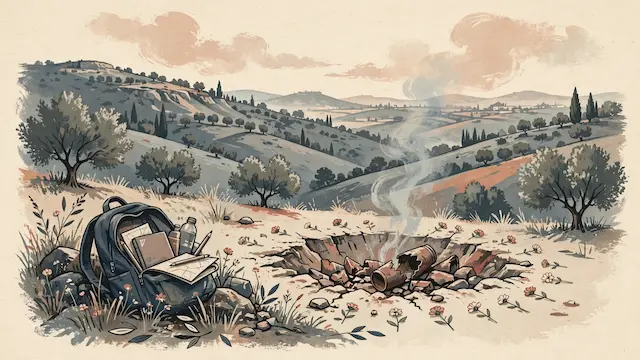
A tragic incident in northern Israel, where a 15-year-old boy was killed and approximately 20 others were injured by an unexploded ordnance (UXO) during a school trip near Mitzpe Pe'er, has raised critical questions about safety protocols for public spaces near the Lebanese border. The event occurred on a popular section of the Israel Trail, which, along with surrounding areas like Kiryat Shmona and Menara, experienced heavy Hezbollah shelling during the recent conflict.
Following the cessation of hostilities in late 2024, the Israel Nature and Parks Authority announced a mapping and safety check of trails for UXO. The IDF reported clearing UXO from over 40 northern communities. In April 2026, the Nature and Parks Authority and KKL-JNF announced further sweeps before reopening areas to the public. However, it remains unclear if the specific site of the explosion was inspected, when the last sweep took place, or who conducted it. The extent to which the first section of the Israel Trail and adjacent areas were cleared is also unknown.
School trips are subject to Ministry of Education regulations, requiring permits for routes that necessitate coordination. Investigations are underway to determine which route was approved, if the students deviated from it, and if safety instructions, such as not touching suspicious objects and reporting them, were adequately conveyed.
The responsibility for UXO clearance is shared among the IDF, police, and the Ministry of Defense's Mine and UXO Removal Administration, depending on the area and incident type. The Nature and Parks Authority and KKL-JNF manage recreational areas within their jurisdictions. The law allows the Minister of Defense to order these authorities to assist in clearing UXO from open areas affected by enemy fire. Questions are being raised about whether this authority was invoked in the northern border region, who coordinated information on shellings, and who authorized the reopening of these areas.
UXO detection in open areas is complex. While volunteer emergency teams conducted sweeps during the war, open spaces have fewer cameras and witnesses. Unexploded ordnance, potentially a submunition from a cluster bomb fired by Hezbollah, can remain hidden in the ground or vegetation. KKL-JNF and the Nature and Parks Authority publish information on open and closed trails, but a consolidated list detailing which trails have been swept and when is not publicly available, leaving hikers uncertain about the safety of specific routes.
A 2017 State Comptroller report found the UXO clearance mechanism inadequate for safely clearing areas intended for civilian use. Subsequent reports in 2021 and May 2025 highlighted deficiencies in clearing military industry complexes and handling hazardous materials. While these reports focused on industrial sites rather than open combat zones, they underscore long-standing concerns about UXO safety. While open and approved trails are generally considered safe, the possibility of UXO presence cannot be entirely ruled out after years of conflict. Hikers are advised to stay on marked trails, check for warnings, and report any suspicious objects to emergency services.
Mentioned
The same event, reported separately by each outlet. Open a few to compare what different newsrooms emphasize — and what they leave out.
Centre 5Right 3Haredi 1Arab 1Other 5
















Not the same event — other stories that share this one’s people, places, or theme: background, reactions, and follow-ups.
