
Bedouin Village Near Rahat Demolished, Sparking Outrage
Translated & summarized from Panet by baba
The Al-Wafa and Reform Party's Negev branch reported the demolition of the Bedouin village Dhahiya, near Rahat, on Monday. Approximately 80 homes and a mosque belonging to the Abu Wadi family were destroyed by authorities. The party condemned the action as a "crime against humanity" and a violation of human rights, stating residents were left without shelter. The village's residents vowed to remain on their land despite the demolition.
The story in 5 lines · by baba
- Authorities demolished the Bedouin village of Dhahiya, comprising about 80 homes and a mosque, near Rahat.
- The Al-Wafa and Reform Party's Negev branch condemned the demolition as a "crime against humanity."
- The village housed approximately 300 residents from the Abu Wadi family.
- Efforts to incorporate the village into Rahat's jurisdiction were previously rejected by ministries.
- Residents vowed to remain on their land despite the destruction of their homes.
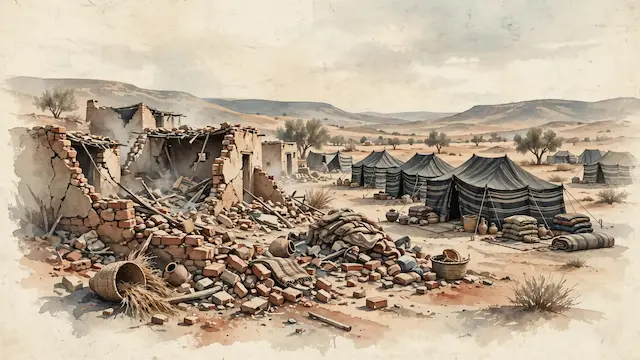
The Al-Wafa and Reform Party's Negev branch announced on Monday the demolition of the village of Dhahiya, located north of Rahat. Forces from the "Authority for the Settlement of Bedouins," accompanied by police and security forces, carried out the demolition starting Monday morning. The village, home to approximately 300 residents and belonging to the Abu Wadi family, consisted of around 80 homes and the Khalid ibn al-Walid mosque, which was reportedly destroyed first. The party stated that efforts to incorporate Dhahiya into Rahat's municipal jurisdiction were rejected by relevant ministries. "What happened today is a real catastrophe," the party declared, highlighting that hundreds of students would return from school to find no shelter. Residents, including women, men, the elderly, and the sick, were left exposed to the elements. The Al-Wafa and Reform Party condemned the demolition as a "crime against humanity" and a violation of basic human rights, accusing Israeli institutions of persistent mistreatment of citizens residing on their land since before 1948. The party concluded by asserting that the residents of Dhahiya would remain in their village and on their land despite the destruction, vowing their resilience against the demolition forces.
Mentioned
The same event, reported separately by each outlet. Open a few to compare what different newsrooms emphasize — and what they leave out.
Arab 2

Not the same event — other stories that share this one’s people, places, or theme: background, reactions, and follow-ups.


