
Israeli Food Prices Surge Five Times Faster Amid Limited Competition and War Costs
Translated & summarized from Cursorinfo by baba
Grocery prices in Israel have increased five times faster in the last four years compared to the previous period, with local store prices up 19.6%. Economists cite limited competition, import barriers, and war-related costs as key factors. Despite a recent slowdown in price growth, cumulative increases remain significant, disproportionately impacting lower-income families. The study analyzed 80 products across hundreds of stores.
The story in 6 lines · by baba
- Israeli grocery prices rose 19.6% in local stores over four years, a fivefold acceleration in price increase rate.
- Limited competition, import barriers, and war costs are cited as primary drivers of rising food prices.
- A 100g Elite chocolate bar price jumped nearly 78%, a Maadanot burekas pack rose 47.5%.
- Global food prices fell 5.7% while Israeli prices rose 16.3% between January 2022 and June 2025.
- Rising food costs disproportionately burden low-income Israeli families.
- The rate of food price increases began to slow in 2026, but accumulated hikes persist.
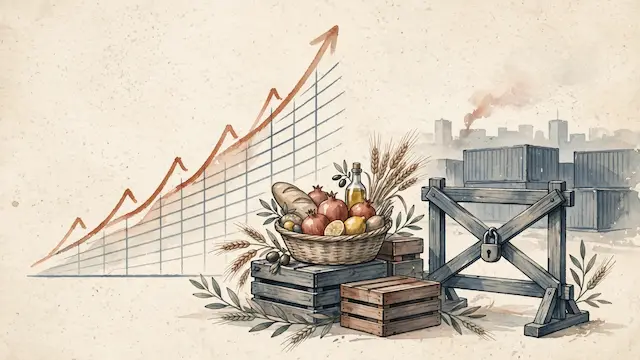
The cost of everyday groceries in Israel has risen significantly faster over the past four years compared to the preceding period, despite a general slowdown in inflation. This price increase affects a wide range of staple goods, not just isolated items. Economists attribute the trend to limited competition, import barriers, and additional expenses incurred due to the ongoing war.
A study from Tel Aviv University, cited by The Jerusalem Post, analyzed the price changes of 80 popular products across approximately 700 stores from September 2018 to August 2026. The research found that prices in local stores increased by 19.6%, online stores by 19%, and discount stores by 14.5% in the last four years. This contrasts sharply with the previous four-year period, which saw price hikes of only 4.3%, 4.1%, and 2.8% respectively, indicating an approximate fivefold acceleration in the rate of price increases.
Specific examples highlight the extent of the price hikes: a 100-gram bar of Elite milk chocolate rose from 5.21 to 9.26 shekels (nearly 78% increase), a pack of Maadanot cheese burekas increased by 47.5%, and a jar of Taster's Choice coffee rose by 26.1%.
Experts point to insufficient competition as a primary driver, with the three largest suppliers controlling 84% of the market for 20 consumer goods, according to OECD data. This market concentration restricts retailers' ability to negotiate lower prices. Import restrictions, including high tariffs and complex regulations, also hinder foreign competition. The consequences of the war, which began on October 7, 2023, such as labor shortages, agricultural disruptions, and increased logistics costs, have further exacerbated the situation. However, economists note that price increases accelerated before the war, suggesting it is not the sole cause.
Data presented to the Knesset shows that while the global food price index decreased by approximately 5.7% from January 2022 to June 2025, Israeli consumer food prices rose by 16.3%. These rising costs disproportionately affect low-income families, for whom food constitutes a larger percentage of their budget. While the rate of food price increases began to slow in 2026, with prices only about 1% higher in August compared to the previous year, the cumulative price hikes from previous years remain.
Mentioned
The same event, reported separately by each outlet. Open a few to compare what different newsrooms emphasize — and what they leave out.
Centre 1Other 2


Not the same event — other stories that share this one’s people, places, or theme: background, reactions, and follow-ups.

