
Israeli Grocery Prices Surge at Nearly Five Times the Previous Rate
Translated & summarized from Channel 9 by baba
Grocery prices in Israel have risen at nearly five times the rate seen in the previous four years, with costs increasing by up to 19.6% in neighborhood stores and 19% online over the last four years. Research indicates this surge is driven by limited domestic competition, high import barriers, and specific agricultural regulations, rather than solely global price hikes or the ongoing war. Despite a recent slowdown in annual food inflation to about 1%, cumulative price increases continue to strain household budgets. Experts call for increased competition and reduced import barriers to make groceries more affordable.
The story in 6 lines · by baba
- Israeli grocery prices have accelerated their rise nearly fivefold in the last four years, increasing by up to 19.6%.
- Limited competition and high import barriers are identified as key drivers of sustained high grocery costs in Israel.
- Global food prices have decreased while Israeli retail prices have significantly increased, indicating domestic market issues.
- Specific products like Elite chocolate and Maadanot cheese burekas saw substantial price hikes of nearly 78% and 47.5% respectively.
- The war has added costs, but the price acceleration began before October 2023.
- Annual food inflation has slowed to 1%, but accumulated price increases remain a burden for consumers.
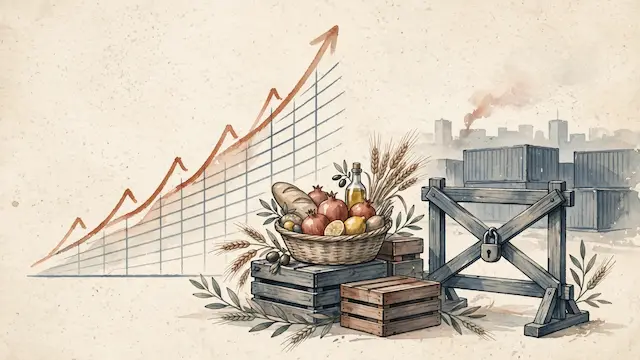
Grocery prices in Israel have accelerated their rise significantly over the past four years, with the rate of increase becoming nearly five times faster than in the preceding four-year period, according to research from Tel Aviv University's Coller School of Management. The study, which analyzed prices of 80 popular items across major supermarket chains from September 2018 to August 2026, found that prices in neighborhood stores rose by 19.6% and online prices by 19% in the last four years, compared to just 4.3% and 4.1% respectively in the previous four years. Discount stores saw a similar acceleration, with prices increasing by 14.5% in the recent period versus 2.8% previously. This acceleration, not a five-fold increase in absolute prices, is attributed to a combination of factors beyond global food prices or the war's impact.
Researchers noted that global food commodity prices have actually decreased since January 2022, while Israeli producer prices for food rose only about 2% in the last four years, contrasting sharply with the significant retail price hikes. This suggests that the increased cost is not solely due to rising raw material or energy expenses. Specific examples include a 100-gram bar of Elite milk chocolate increasing by nearly 78% and an 800-gram package of Maadanot cheese burekas rising by 47.5% in online stores.
Key underlying reasons for Israel's high grocery costs identified by the study and international organizations like the OECD include limited competition, high import barriers, and specific agricultural regulations. The wholesale food market is particularly concentrated, with the three largest suppliers controlling 84% of the market for 20 consumer goods, limiting choices for retailers and consumers. Additionally, import restrictions, including tariffs and administrative hurdles on agricultural products, contribute to higher prices, despite efforts to support local farmers.
The war that began on October 7, 2023, has added new costs related to labor shortages, disrupted supply chains, and logistics, exacerbating existing vulnerabilities. However, the price acceleration predates the conflict. While the annual inflation rate for food has slowed to around 1% as of August 2026, this does not negate the cumulative price increases experienced by consumers.
Experts suggest that to make groceries more affordable, Israel needs to enhance competition by simplifying market entry for new suppliers and importers, systematically reduce import barriers and tariffs where they disproportionately affect consumers, and increase transparency in the pricing chain. While individual consumers can save by comparing prices and opting for store brands, systemic changes are necessary to address the root causes of the sustained high cost of living.
Mentioned
The same event, reported separately by each outlet. Open a few to compare what different newsrooms emphasize — and what they leave out.
Centre 1Other 2


Not the same event — other stories that share this one’s people, places, or theme: background, reactions, and follow-ups.

