
Iran Retains 70% of Missile Stockpile Despite Strikes, Intelligence Reports
Translated & summarized from Kikar HaShabbat by baba
Western intelligence reports from October 2026 reveal Iran has retained about 70% of its ballistic missile stockpile and 60% of its launchers, despite recent strikes. Iran's strategy of underground "missile cities," reliance on pre-made components, and external aid from China and Russia has allowed it to maintain and quickly replenish its arsenal. This resilience alters the deterrence balance, as Iran can sustain a prolonged conflict and continues to pose threats to regional shipping and its allies.
The story in 6 lines · by baba
- Iran has retained approximately 70% of its ballistic missile stockpile, with 1,800-2,000 missiles capable of reaching Israel.
- Western intelligence reports from October 2026 contradict official narratives about Iran's destroyed weapons infrastructure.
- Iran's strategy includes underground "missile cities," pre-made component stockpiles, and external aid from China and Russia.
- The country maintains 60% of its launchers and 40% of its attack drones, with rapid reassembly capabilities.
- Iran's preserved arsenal allows for a prolonged conflict and shifts the regional deterrence balance.
- The resilience of Iran's production capabilities poses an ongoing asymmetric threat.
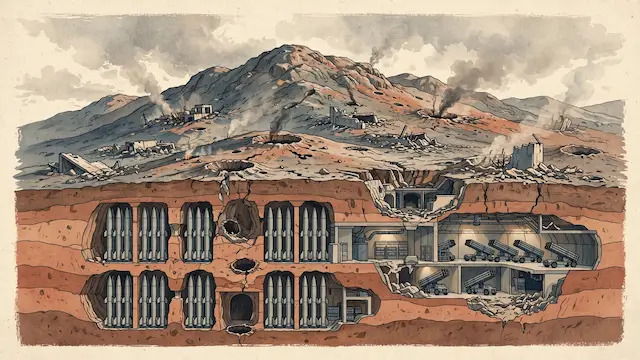
Recent Western intelligence reports, published in October 2026, indicate that Iran has preserved approximately 70% of its original ballistic missile stockpile, estimated at 1,800 to 2,000 missiles capable of reaching Israel. Additionally, about 60% of its launchers and 40% of its attack drone inventory remain intact. Crucially, Iran's capacity to produce and reassemble weapons has not been eliminated and continues to allow for relatively rapid replenishment of its arsenal. These findings contradict official narratives suggesting the destruction of Iran's ballistic missile and unmanned aerial vehicle production infrastructure.
Iran's strategy to maintain its capabilities involved several key elements implemented over years. Firstly, the development of "missile cities", underground facilities buried deep within granite mountains, made its production lines and storage sites highly resistant to aerial attacks. Even when surface facilities were hit, the core infrastructure remained protected. Secondly, Iran relied on pre-made components, stockpiling warheads, navigation systems, and other critical parts. This allowed for the rapid assembly of complete missiles, bypassing the need for a full production line from scratch.
Furthermore, external assistance has played a significant role. Intelligence sources point to continued supply of critical components from China and support from Russia, including finished missiles and assistance in restoring systems. These international connections provided a safety net, enabling Iran to bridge gaps created by attacks. The immediate implication is that Iran is not facing an "inventory depletion" and possesses sufficient firepower and renewal capability for a prolonged conflict, shifting the deterrence balance.
Future strikes by the US or Israel will encounter a responsive force rather than a depleted adversary. While joint air campaigns may have achieved tactical successes like temporary damage or delays, they have not resulted in strategic decision. The speed of Iran's recovery surprised Western professionals, highlighting the gap between physical destruction and the resilience of its deeply embedded and dispersed production capabilities. This asymmetric threat continues to strengthen, enabling Tehran to supply its "axis of resistance" and maintain its threat to global energy routes via the Strait of Hormuz.
Mentioned




