
Fly Dubai Incident Highlights Need for Professional Governance
Translated & summarized from Maariv by baba
A near-disaster on a Fly Dubai flight has prompted an examination of governance in Israel, highlighting the dangers of political appointments and instability in managing public services. The author argues that critical sectors like healthcare and education require professional expertise and stable leadership, not just political considerations. Failures in these areas lead to tangible public impacts, and citizens should demand higher professional standards from their leaders.
The story in 5 lines · by baba
- A near-disaster on a Fly Dubai flight highlights concerns about political appointments and instability in managing public services.
- Author Liora Minka argues that critical public systems require professional expertise and stable management, not political considerations.
- Political appointments and high turnover in senior management hinder long-term planning and effective public service delivery.
- Public services suffer from issues like long hospital waits, overcrowded classrooms, and traffic congestion due to poor management.
- The article calls for a shift in evaluating government ministries based on public responsibility and system effectiveness.
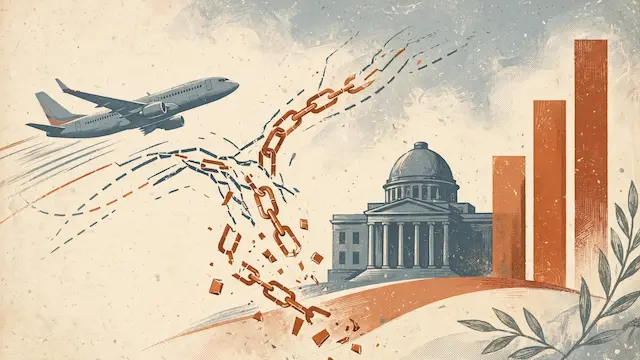
A near-disaster on a Fly Dubai flight underscores the fragility of complex systems and raises questions about accountability for public safety, according to author Liora Minka. The incident prompts a critical examination of how essential public services are managed in Israel, emphasizing that political appointments and administrative instability can have severe consequences.
Minka argues that government ministries, responsible for critical areas like healthcare, education, transportation, welfare, and internal security, require professional expertise, long-term planning, and stable management. When political considerations override these needs, the public suffers through longer hospital waits, overcrowded classrooms, traffic congestion, and a diminished sense of personal security, as exemplified by the near-miss on the Fly Dubai flight.
Compounding the issue of political appointments is a structural problem of discontinuity and instability. Professional literature and OECD surveys indicate that high turnover in senior management hinders the implementation of long-term reforms. Effective management of public systems necessitates accumulated knowledge, multi-year planning, and a stable professional core, which are undermined by frequent leadership changes and short tenures.
The author points to data illustrating the cost of this lack of continuity, including lower hospitalization bed numbers compared to the OECD average, larger class sizes, and increased traffic and public transport congestion. These systemic failures, while not always making major headlines, significantly shape the quality of life for all citizens.
Minka suggests a shift in perspective, proposing that government ministries should be evaluated based on the responsibility they hold towards the public and their system's ability to function effectively, especially during critical moments. While elections may not solve all problems, they offer an opportunity to demand higher standards of professionalism and competence from those managing the systems upon which daily life depends.
Mentioned

