Israeli Political Commentator Vows to Pursue Leakers of Private Communications
Translated & summarized from Behadrei Haredim by baba
Political commentator Amit Segal condemned the leak of WhatsApp messages from Prime Minister Benjamin Netanyahu's advisor Yonatan Uriach, calling the act "terrible and criminal." Segal stated he would pursue anyone who published such leaked content. Uriach's lawyers issued a warning against further distribution, claiming some messages were altered. Segal defended journalistic practices, explaining that information exchange with sources is standard, and suggested similar leaks could be found across the political spectrum.
The story in 6 lines · by baba
- Amit Segal condemned the leak of Yonatan Uriach's WhatsApp messages as a "terrible and criminal act."
- Segal stated he would "pursue everyone" who uploaded leaked private correspondence.
- Uriach's lawyers warned that anyone publishing or distributing the messages would face legal action.
- The lawyers claimed some of the leaked conversations were altered or had details added.
- Segal defended journalistic practices, explaining information exchange with sources is standard.
- Segal suggested similar leaks could be found across all Israeli political parties.
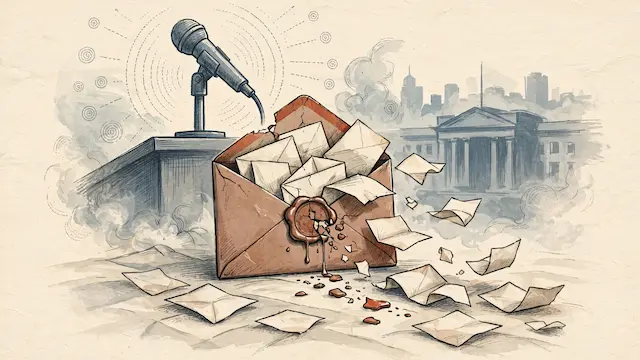
Amit Segal, a political commentator for Channel 12 News, has spoken out against the leak of WhatsApp messages belonging to Yonatan Uriach, a close advisor to Prime Minister Benjamin Netanyahu. The leak, which followed a security breach, included conversations between Uriach and Segal, sparking debate online about the relationships between journalists and political figures.
During a discussion on Channel 12, Segal condemned the hacking and dissemination of private communications, stating, "I think breaking into someone's phone and emptying their life is a terrible and criminal act." He added, "I personally admit that if they had broken into my phone and published correspondence, I would have pursued everyone who uploaded it to Twitter. That's what I would have done." Segal asserted that he held the same stance regarding previous phone breaches involving figures like Naftali Bennett.
Shortly after Segal's remarks, Uriach issued a statement through his lawyers, Amit Hadad and Noa Milstein, warning against further distribution of the messages. "Whoever hacked Yonatan Uriach's WhatsApp and published personal correspondence, while adding and altering the conversations, will pay the full price," the statement read. The lawyers also cautioned that "the same will happen to anyone who publishes, distributes, or shares messages. Anyone doing so is committing a criminal offense and will be sued personally."
The lawyers claimed that some of the published conversations were altered or had details added, a claim that has not been independently verified. Segal, addressing his own communications with Uriach, explained that the exchange of information and opinions between journalists and their sources is a fundamental part of journalistic work. "I'm going to tell you a terrible secret, but journalists don't get information because of their beautiful turquoise eyes, certainly not me," he said. "They get information within a very delicate tango between the interviewer and the interviewed, between a source and a journalist, and this can include the exchange of information. You give information and receive information, as well as exchange opinions."
Segal recounted that over the years, political figures he covered had provided him with draft speeches and consulted him on campaigns. He expressed hope that no more phones would be breached during the election campaign, suggesting that similar correspondences could be found among political figures across all camps. "From the Arab parties to the Haredi parties, from the Izankots to Gantz, in each of them, if their phone is breached, similar, if not identical, and even more far-reaching correspondences will be found," Segal stated.
Mentioned
The same event, reported separately by each outlet. Open a few to compare what different newsrooms emphasize — and what they leave out.
Left 1Centre 1Right 3Haredi 1Other 1






Not the same event — other stories that share this one’s people, places, or theme: background, reactions, and follow-ups.