
US Imposes Sanctions on International Criminal Court
Translated & summarized from 0404 by baba
The U.S. has imposed sanctions on the International Criminal Court (ICC) as an institution, freezing its assets under U.S. jurisdiction and barring American businesses from dealing with it. Secretary of State Marco Rubio stated the U.S. would dismantle the court if it continues its actions. The sanctions follow the ICC's investigations into U.S. personnel in Afghanistan and its arrest warrants against Israeli leaders. The ICC called the sanctions an "attack on the rule of law," while Israel criticized the Nobel Peace Prize awarded to a former ICC judge involved in a UN inquiry against the country.
The story in 6 lines · by baba
- The U.S. imposed sanctions on the International Criminal Court as an institution, freezing its assets and barring business.
- Secretary of State Marco Rubio threatened to dismantle the ICC if it continues its actions.
- The sanctions target the ICC's investigations into U.S. military personnel and Israeli leaders.
- Israel criticized the Nobel Peace Prize awarded to former ICC judge Navi Pillay.
- The ICC called the U.S. sanctions an "attack on the rule of law" and vowed to continue its work.
- Several European nations and Japan expressed disagreement with the U.S. decision.
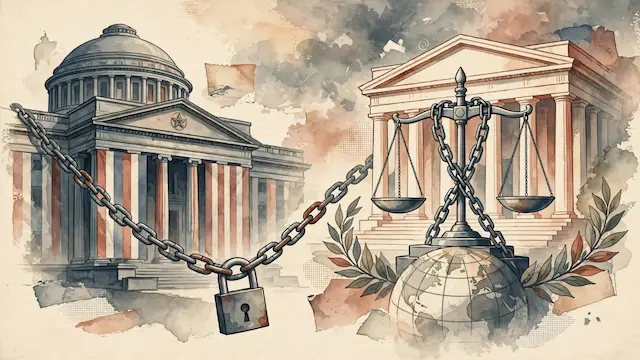
The Trump administration has imposed sanctions on the International Criminal Court (ICC) in The Hague as an institution, following previous sanctions on 13 of its judges and prosecutors. "Either the ICC stops its threats, or we will end the court," stated Secretary of State Marco Rubio, adding that the U.S. would dismantle the court "brick by brick" if necessary. The sanctions freeze ICC assets within U.S. jurisdiction and generally prohibit American companies and citizens from doing business with the court. The U.S. Treasury Department has allowed certain services to continue for 180 days, giving member states time to address Washington's concerns. Rubio indicated that if these efforts fail, the U.S. would continue to adapt its response.
The United States and Israel are not signatories to the Rome Statute, which established the ICC. Washington opposes the court's investigations into American military personnel in Afghanistan and arrest warrants issued against Israeli leaders following the war in Gaza. The ICC maintains its jurisdiction over crimes committed within its territory, even if the suspect is from a non-member state.
The U.S. action came hours after the Norwegian Committee announced the Nobel Peace Prize would be awarded to Navi Pillay, a former ICC judge and head of a UN commission of inquiry against Israel. Prime Minister Benjamin Netanyahu's office responded that the Nobel Committee had "lost its moral compass" by honoring someone who "built her career on inventing and spreading blood libels against the only Jewish state." The ICC described the sanctions as an "attack on the rule of law" and an attempt to disrupt its operations and intimidate its staff. ICC President Tomoko Akane stated the court would continue its work independently and impartially, urging its 125 member states to ensure it has the necessary resources. The foreign ministers of Canada, Denmark, Germany, France, Italy, Japan, the Netherlands, and the United Kingdom issued a joint statement expressing their regret and strong disagreement with the U.S. decision.
Mentioned
The same event, reported separately by each outlet. Open a few to compare what different newsrooms emphasize — and what they leave out.
Right 1Haredi 1Arab 1Other 1



Not the same event — other stories that share this one’s people, places, or theme: background, reactions, and follow-ups.
