
Israeli Consumer Spending Surges, But Global Retail Giants Face Downturn
Translated & summarized from Hamal by baba
Israeli consumers spent a record 53.252 billion shekels on credit cards during the High Holidays, a 6.2% increase year-over-year, fueled by domestic spending replacing international travel. However, this surge masks potential future financial strain due to upcoming credit card payments and high interest rates. Globally, major retail companies are facing a downturn, with declining stock values and reduced consumer spending attributed to inflation, interest rates, and the impact of weight-loss drugs. While some Israeli companies may be affected, analysts advise caution against directly applying global trends to the local market.
The story in 6 lines · by baba
- Israeli credit card spending hit a record 53.252 billion shekels during the High Holidays, a 6.2% annual increase.
- The spending surge is attributed to Israelis substituting domestic purchases for canceled international trips.
- Global retail giants are experiencing a downturn, with significant stock value losses and reduced consumer spending.
- High inflation, rising interest rates, and the impact of weight-loss drugs are key factors in the global retail slump.
- Analysts warn of potential strain on Israeli household budgets due to upcoming credit card payments and high interest rates.
- Experts caution against directly applying global retail trends to the Israeli market due to unique local economic factors.
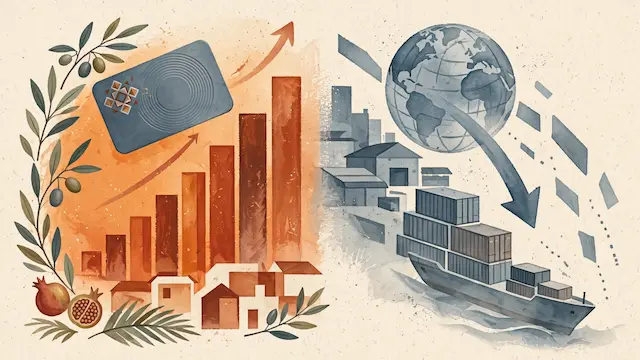
Israeli consumers set a new record for credit card spending during the High Holidays, reaching 53.252 billion shekels, a 6.2% increase from the previous year. This surge, driven by Israelis opting for domestic vacations and shopping instead of international travel, pushed daily spending past 1.775 billion shekels. Spending in physical stores rose to approximately 22.9 billion shekels, while online purchases hit around 31 billion shekels, with daily averages exceeding one billion shekels for the first time.
However, this spending boom is not indicative of organic growth but rather a substitution effect, with consumers using savings from canceled foreign trips. Analysts warn that the upcoming credit card payments, coupled with high interest rates, could strain Israeli household budgets and impact spending leading up to year-end sales.
Globally, major retail and consumer giants are experiencing a significant downturn. The Consumer Staples ETF (XLP), tracking companies like Walmart and Coca-Cola, saw a 3% drop in the third quarter, reflecting billions in lost market value. McDonald's CEO Chris Kempczinski described reduced customer traffic as a "new normal" due to high interest rates, with the company providing $5 billion in support to franchisees by 2030. Nike's stock has fallen 34.5% in the last six months, with revenue forecasts for fiscal year 2027 showing a high single-digit decline, and China sales expected to drop significantly.
Factors contributing to the global retail slump include sticky inflation, high interest rates, rising energy prices, and the increasing popularity of weight-loss drugs like GLP-1, which reduce food and beverage consumption. Analysts like Violetta Todorova note that traditionally defensive consumer staples are being hit by rising input costs, reduced purchasing power for lower and middle-income consumers, and interest rate hikes. The conflict with Iran has also driven up oil prices, impacting production costs and consumer budgets.
While some Israeli retailers like Walmart and Costco are performing better due to their focus on value, many brands are struggling. The rise of discount chains and private labels is also affecting traditional brands. The impact of GLP-1 drugs is estimated to cause a 3% reduction in sales for the snack, candy, and soft drink industries, with consumers on these medications consuming up to 30% fewer calories. Analysts like Ben Tzvi suggest that the decline in retail stocks is more about falling multiples than profit collapses, with investors shifting towards technology and AI stocks, and higher yields on risk-free U.S. government bonds making dividends less attractive.
Despite global trends, some analysts caution against directly applying overseas patterns to Israel. Yuval Gur Aryeh points out that while consumer demand for essentials remains, shifts to cheaper alternatives and promotions are occurring. Counteracting forces in Israel include household budget pressures versus potential easing of import and financing costs. A return to normalcy might also see some spending shift back to international travel and entertainment. The true test for Israeli companies will be their ability to maintain profitability amidst moderating growth and whether their results meet market expectations.
Mentioned
The same event, reported separately by each outlet. Open a few to compare what different newsrooms emphasize — and what they leave out.
Centre 2

Not the same event — other stories that share this one’s people, places, or theme: background, reactions, and follow-ups.


