
Global Retail Giants Suffer as Israeli Consumer Spending Peaks
Translated & summarized from Walla by baba
Israeli credit card spending hit a record 53.252 billion shekels during the High Holidays, fueled by domestic spending replacing international travel. Globally, major retail companies are facing declining revenues and investor confidence due to inflation, high interest rates, and changing consumer habits, including the impact of weight-loss drugs. Companies like McDonald's and Nike have seen stock drops, while discount retailers like Walmart are performing better. Analysts are cautious about applying global trends directly to Israel's unique market dynamics.
The story in 6 lines · by baba
- Israeli credit card spending reached a record 53.252 billion shekels during the High Holidays.
- Global retail giants are experiencing downturns due to inflation, high interest rates, and reduced consumer spending.
- McDonald's and Nike reported stock declines and projected lower revenues amid economic pressures.
- The rise of weight-loss drugs is impacting food and beverage consumption patterns.
- Discount retailers like Walmart and Costco are performing better than traditional brand-name companies.
- Analysts advise caution when applying global retail trends directly to the Israeli market.
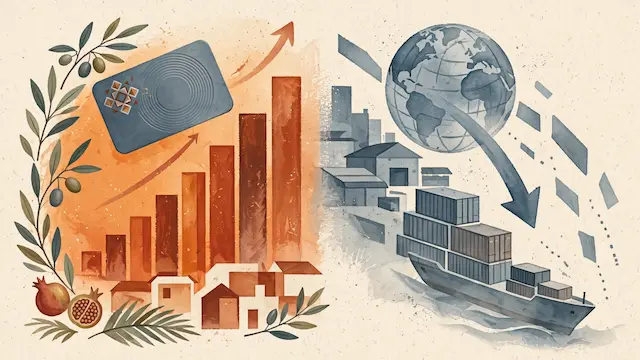
Israeli consumers set a new record for credit card spending during the High Holidays, reaching 53.252 billion shekels, a 6.2% increase from the previous year. This surge, driven by Israelis foregoing international travel and spending on local hospitality and shopping, pushed daily spending past 1.775 billion shekels. However, this spending boom is not indicative of organic growth but rather a temporary shift, raising concerns about future consumer capacity, especially with rising interest rates.
Globally, major retail and consumer giants are experiencing a downturn. Consumer spending has contracted, impacting company revenues and investor confidence. The traditional 'defensive' stocks, which were expected to remain stable during economic slowdowns, have faltered. Factors contributing to this include sticky inflation, high interest rates, rising energy prices, and the increasing attractiveness of alternative investments.
Companies like McDonald's and Nike have reported significant stock declines and projected lower revenues. McDonald's CEO Chris Kempczinski described reduced customer traffic as a "new normal" due to high interest rates, necessitating substantial support for franchisees. Nike anticipates a high single-digit percentage drop in revenue for fiscal year 2027, with a notable decrease expected in China.
The shift in consumer behavior is further influenced by the growing adoption of weight-loss drugs like GLP-1, which are reducing overall food and beverage consumption. This trend, coupled with persistent inflation, is pushing consumers towards discount retailers like Walmart and Costco, while brand-name companies struggle. Analysts note that while some companies like Coca-Cola and Estee Lauder have seen stock increases, the overall sector faces challenges, requiring individual company analysis.
While the Israeli consumer spending boom provided a temporary cash flow boost to local retailers, it is not immune to macroeconomic forces. Investors are reassessing the 'defensive' nature of retail and consumer stocks, leading to significant price fluctuations. The question remains whether the Israeli market will experience a similar downturn, with analysts cautioning against directly applying global trends to the local economy due to unique Israeli market dynamics.
Mentioned
The same event, reported separately by each outlet. Open a few to compare what different newsrooms emphasize — and what they leave out.
Centre 2

Not the same event — other stories that share this one’s people, places, or theme: background, reactions, and follow-ups.


