
NYT: US Envoy's Advisor Altered Reports Critical of Israel
Translated & summarized from Vesty by baba
A New York Times investigation revealed that David Millstein, a senior advisor to the U.S. Ambassador to Israel, repeatedly altered or blocked diplomatic reports critical of the Israeli government. These actions allegedly presented Prime Minister Benjamin Netanyahu's administration in a more favorable light to Washington, omitting warnings about settler violence and Palestinian deaths. The report details specific instances where Millstein allegedly suppressed critical information regarding settlement expansion and violence in Judea and Samaria. Millstein and Ambassador Mike Huckabee declined to comment directly on the report's findings, with Huckabee calling the investigation "ridiculous."
The story in 6 lines · by baba
- David Millstein, advisor to the U.S. Ambassador to Israel, allegedly blocked and rewrote critical reports on Israel.
- The alterations aimed to present Prime Minister Benjamin Netanyahu's government more favorably to Washington.
- Reports on settler violence and Palestinian deaths were allegedly replaced with praise for Israeli leadership.
- Specific instances include blocking reports on settlement expansion and altering warnings about violence.
- Millstein allegedly asked colleagues if they supported Israel or Hamas, creating fear.
- Ambassador Mike Huckabee denied the report's claims, calling it "ridiculous."
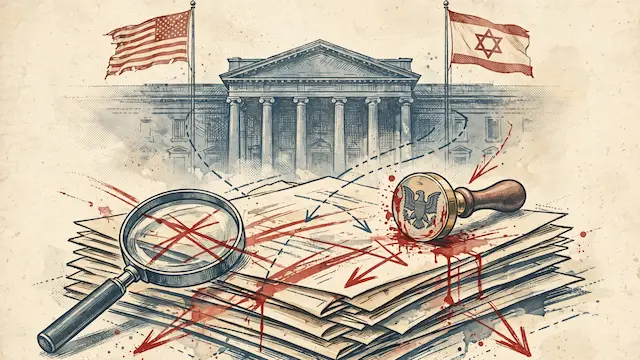
David Millstein, a senior advisor to the U.S. Ambassador to Israel, repeatedly blocked or rewrote diplomatic reports to present the government of Benjamin Netanyahu more favorably to Washington, according to a New York Times investigation. Instead of warnings about settler violence and Palestinian deaths, the U.S. administration received reports praising Israeli leadership, sources told the newspaper. The NYT investigation included interviews with 15 U.S. officials who worked with Millstein and nine former diplomats, along with the review of dozens of documents, including diplomatic cables and internal correspondence.
Sources cited concerns that Millstein's actions hindered the transmission of accurate information to Washington and sometimes contradicted President Donald Trump's stated policies. One instance involved Israel's approval of a record number of settlements in Judea and Samaria in late March 2026. Embassy staff prepared a critical report, but Millstein allegedly blocked its transmission. Similarly, in April 2026, when IDF officials warned that settler violence could provoke a new intifada, Millstein allegedly altered reports to include praise for Netanyahu's "new and unprecedented initiatives" to combat violence, changing the document's title to "Government Takes Decisive Action Against Escalation of Violence on the West Bank."
Another case involved the deaths of nine U.S. citizens of Palestinian descent in Judea and Samaria over four years. When U.S. Congress members requested information, embassy staff prepared a report detailing stalled investigations and closed cases. Millstein reportedly blocked this document, suggesting instead a letter stating Israel was conducting investigations properly. He began exerting control over outgoing communications shortly after returning to the embassy in Jerusalem early in Trump's second term, demanding approval for correspondence on Palestinian issues, which reduced report frequency significantly.
Sources believe Millstein's interference, more active than any predecessor, distorts Washington's understanding of events and shields the Netanyahu government from potential U.S. administration reactions. He allegedly asked colleagues if they were "for Israel" or "for Hamas," causing some to fear speaking freely. It remains unclear how aware Ambassador Mike Huckabee was of Millstein's actions, though sources suggest they may have jointly misrepresented information to the Trump administration at times, while Huckabee also intervened to stop Millstein on occasion.
The New York Times investigation builds on earlier reports about Millstein's influence, providing new documentary evidence and previously unpublished examples of information being skewed to favor the Netanyahu government over the past year. Despite dissatisfaction expressed by some White House and State Department officials, it is not yet clear if Millstein's interference has impacted U.S. policy toward Israel. Millstein and Huckabee declined to be interviewed by the NYT. Huckabee issued a written statement calling the investigation "ridiculous" and categorically rejecting its claims. The State Department stated that employees remain focused on advancing President Trump's agenda.
Mentioned
The same event, reported separately by each outlet. Open a few to compare what different newsrooms emphasize — and what they leave out.
Left 1Centre 4Right 2Haredi 1Arab 1Other 2











Not the same event — other stories that share this one’s people, places, or theme: background, reactions, and follow-ups.
