US Envoy Accused of Capping Reports Critical of Israel
Translated & summarized from Channel 13 by baba
David Millstein, a senior advisor to U.S. Ambassador to Israel Mike Hackbee, allegedly filtered and suppressed diplomatic reports critical of Israeli government actions, according to a New York Times investigation. Millstein reportedly buried a memo warning about settlement expansion and blocked reports on Israeli failures to act against settlers. Senior diplomats expressed concern that these actions distorted the U.S. administration's understanding of events, while Ambassador Hackbee defended his advisor and dismissed the report's findings.
The story in 6 lines · by baba
- David Millstein, aide to U.S. Ambassador Mike Hackbee, allegedly censored reports on Israeli actions.
- A memo warning about settlement expansion was reportedly buried by Millstein.
- Millstein allegedly blocked reports on Israeli failures to act against settlers.
- He also prevented distribution of a report on U.S.-Palestinian deaths.
- Ambassador Hackbee defended Millstein and dismissed the New York Times report.
- Former Ambassador Dan Kurtzer stated embassies must report all information to Washington.
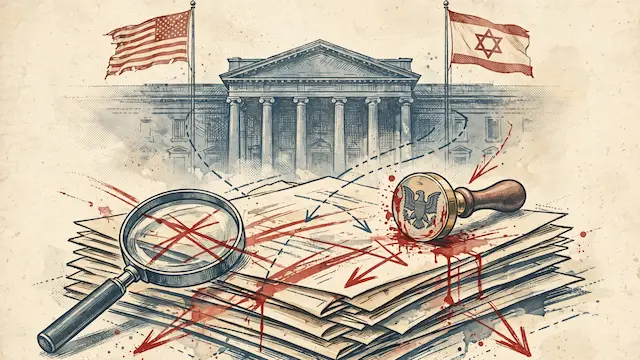
David Millstein, a senior advisor to U.S. Ambassador to Israel Mike Hackbee, allegedly worked to filter, block, or rewrite diplomatic reports concerning the Israeli government's actions since taking his post, according to a New York Times investigation. The report, based on interviews with over a dozen U.S. officials and internal State Department documents, claims Millstein withheld critical information from Trump administration decision-makers.
One instance cited involved Israel's approval of settlement expansion in late March. A Jerusalem embassy team drafted an urgent memo warning that the move could violate President Trump's red lines against annexation, but three officials stated the memo never reached Washington, having been buried by Millstein. In another case, as "Jewish terrorism" incidents escalated, Millstein allegedly blocked reports indicating Israeli authorities' failure to act against perpetrators. Instead, the embassy sent a cable praising the Israeli government and Prime Minister Netanyahu for taking a "hard line" against attacks.
Furthermore, when members of Congress sought answers regarding the deaths of nine U.S.-Palestinian citizens killed by settlers and security forces, Millstein prevented the distribution of a detailed embassy report. This action "effectively blocked lawmakers' efforts to obtain information." Millstein's interventions also extended to the Palestinian Affairs section of the embassy, where he demanded prior approval for all communications. This led to a drastic reduction in telegrams, from several per week to a few per month, as staff avoided writing reports fearing they would be omitted or rephrased.
Senior diplomats expressed deep concern that these actions distorted the situation presented to the administration. Dan Kurtzer, former U.S. Ambassador to Israel under President George W. Bush, stated that embassies "must tell Washington everything, the good, the bad, and the ugly." He added that failure to do so "harms the decision-making process and may even undermine the President's policy."
The issue reportedly caused frustration among senior State Department and White House officials, who sometimes had to bypass standard diplomatic channels to contact embassy staff directly. Ambassador Hackbee publicly defended Millstein, dismissing the allegations and expressing "complete confidence" in his advisor's "impeccable integrity." In an official response, Hackbee rejected the findings, claiming the New York Times' "factual components are so lacking they equate to other efforts by the newspaper."
Mentioned