
Hamas Rebuilding Military Strength in Gaza Three Years After Surprise Attack
Translated & summarized from JDN by baba
Three years after the October 7th attack, Hamas is actively rebuilding its military and civilian control in Gaza, recruiting thousands of new operatives and restoring weapon production and tunnel networks. The organization is reportedly using civilian infrastructure, including hospitals, for its operations and preparing for renewed conflict. This resurgence raises strategic questions for Israel about whether it has learned from past intelligence failures and risks creating a new flawed assumption about Hamas's intentions and capabilities.
The story in 6 lines · by baba
- Hamas is actively rebuilding its military and civilian control in Gaza three years after the October 7th attack.
- The organization has recruited an estimated 25,000 to 30,000 new operatives, nearing pre-war levels.
- Hamas is restoring weapon production facilities and reconstructing its tunnel network within Gaza.
- The group is reportedly using civilian infrastructure, including hospitals, for military operations and interrogations.
- Hamas is preparing for renewed conflict and resisting any efforts to dismantle its military wing.
- Israel faces strategic questions about learning from past intelligence failures amid Hamas's resurgence.
Three years after Hamas's surprise attack on the Gaza border communities, a troubling situation is emerging in the Gaza Strip. While Hamas suffered severe damage during the war, it remains the sovereign power in Gaza, actively working to restore its military capabilities, re-establish civilian control, and prepare for potential renewed conflict. Intelligence assessments and sources within Gaza indicate the organization is not content with mere survival. Hamas is systematically rebuilding its strength, particularly in areas where the IDF has reduced its presence.
A significant development is the recruitment of new personnel. Estimates suggest Hamas has recruited between 25,000 and 30,000 new operatives, a number approaching the size of its military wing before the October 7th attack. This recruitment drive targets young men aged 18-22, who are undergoing training to rebuild units damaged during the war, including the Nukhba forces. Concurrently, Hamas is distributing weapons among its civilian supporters to create an armed base that can sustain the organization even under international pressure to disarm.
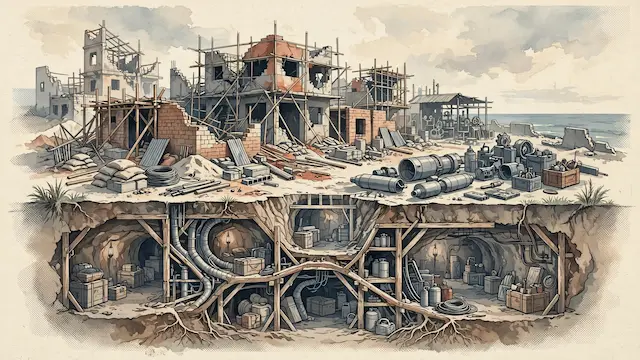
In terms of military capabilities, Hamas has managed to re-establish improvised production facilities within civilian structures, manufacturing hundreds of explosive devices and anti-tank missiles monthly. Alongside local production, the organization continues efforts to smuggle weapons, drones, and communication equipment. Reconstruction of parts of its tunnel network, damaged by IDF operations, is also underway, indicating a proactive effort to rebuild rather than just maintain existing assets.
Hamas is notably utilizing civilian infrastructure, including hospitals and schools, for its operations. Sources report the transfer of weapons from underground to civilian buildings, with dozens of Hamas operatives, some masked, reportedly present at Nasser Hospital in Khan Younis. The IDF claims Hamas security and intelligence mechanisms used hospital facilities for interrogations and torture of opponents.
Security officials recognize Hamas's ongoing efforts to restore its capabilities and are preparing for the possibility of renewed fighting. Hamas's plans reportedly include complex attacks and further abductions of IDF soldiers. The organization adamantly opposes any plan to dismantle its military wing, viewing its weaponry as a red line. It also maintains its grip on civilian governance, paying tens of thousands of officials and controlling municipal mechanisms. Furthermore, Hamas is reportedly intercepting some humanitarian aid trucks entering Gaza, enhancing its economic power and influence.
This situation raises strategic questions for Israel regarding whether it has learned from the intelligence failures preceding the October 7th attack or risks creating a new flawed assumption. The previous assumption was that Hamas was deterred and sought quiet, manageable through concessions. Current data points to an organization actively rebuilding, recruiting, producing weapons, and restoring infrastructure, all while refusing to relinquish its military power. Despite this accumulating intelligence, Israel has not yet destroyed all of Hamas's regenerating infrastructure, prompting concerns that the flawed perception has not disappeared but merely transformed.
The same event, reported separately by each outlet. Open a few to compare what different newsrooms emphasize — and what they leave out.
Centre 1Haredi 1


Not the same event — other stories that share this one’s people, places, or theme: background, reactions, and follow-ups.



