Israel Faces Difficult Questions on October 7 Failures
Translated & summarized from Calcalist by baba
Israel faces significant challenges in establishing a state commission of inquiry into the October 7th Hamas attack, including societal polarization and lengthy investigation times. Prime Minister Benjamin Netanyahu is accused of obstructing the probe due to potential personal responsibility, drawing parallels to the Meron disaster inquiry. The article argues that ignoring warnings and failing to bolster defenses led to the catastrophe, exacerbated by a flawed intelligence concept and reduced security on holidays. Most implicated officials have left their posts, but Netanyahu remains, potentially facing criminal charges for his alleged disregard of warnings.
The story in 6 lines · by baba
- Israel must form a state commission of inquiry to investigate the October 7th failures, despite significant obstacles.
- Prime Minister Benjamin Netanyahu is accused of obstructing the investigation due to potential personal responsibility.
- The article argues Netanyahu ignored critical warnings and failed to bolster border defenses before the attack.
- A flawed intelligence concept viewing Hamas as deterred contributed to the security lapse.
- Reduced security readiness on Saturdays and holidays is identified as a recurring vulnerability.
- Netanyahu may face criminal charges for alleged criminal disregard of warnings, similar to the Meron disaster inquiry.
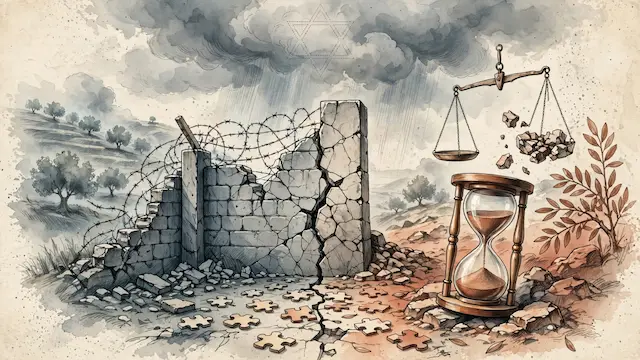
Israel must establish a state commission of inquiry to investigate the failures that led to the October 7th Hamas attack, a move explicitly promised by the "change bloc" in the Knesset. However, significant obstacles stand in the way, including deep societal polarization that breeds distrust in investigative bodies and a tendency for such commissions to drag on indefinitely, as seen with the submarine investigation and Benjamin Netanyahu's ongoing criminal trial. Despite these challenges, the article argues that avoiding a thorough examination of the "Western Negev catastrophe," the greatest disaster to befall Israel since the Holocaust, is not an option. The author dismisses the State Comptroller as an insufficient venue for this critical inquiry.
Prime Minister Benjamin Netanyahu is presented as actively obstructing such an investigation, a stance attributed to his potential personal responsibility, similar to the findings of the Meron disaster inquiry. That inquiry found Netanyahu personally responsible for the deaths of 45 worshippers due to his failure to act on warnings. The article contends that Netanyahu, despite his self-proclaimed expertise in counter-terrorism, ignored warnings prior to October 7th and failed to either preemptively strike Hamas or significantly bolster border defenses. His administration's embrace of a flawed concept that viewed Hamas as deterred and economically dependent, influenced by his political alliance with "Kahanists," is cited as a major factor in the intelligence failure.
The article also touches on the impact of the judicial overhaul protests, suggesting that Hamas and Iran perceived the resulting societal division as an opportunity. It further highlights a recurring pattern of reduced security readiness on Saturdays and holidays, a vulnerability exploited in past disasters like the 1973 Yom Kippur War, which also fell on a Saturday. The author stresses the need for heightened defenses during these periods, especially when warnings are present.
Personal responsibility is a key theme, with the article noting that most officials implicated in the October 7th failures, including the former Chief of Staff, heads of Mossad and Shin Bet, and senior military intelligence officers, have already left their positions. Netanyahu, however, remains. While he may not face the same institutional recommendations as other officials, legal experts suggest the Meron inquiry's findings could warrant criminal charges against him for negligent homicide. The article anticipates that Netanyahu will likely not cooperate fully with the investigation, but asserts that the core conclusion, his "criminal disregard" of warnings that necessitated strengthening border defenses, will be difficult to evade.
Mentioned
The same event, reported separately by each outlet. Open a few to compare what different newsrooms emphasize — and what they leave out.
Left 1Other 1


Not the same event — other stories that share this one’s people, places, or theme: background, reactions, and follow-ups.