
Satellite Images Reveal Iran Restoring Secret Nuclear Facility
Translated & summarized from Israel Hayom by baba
New satellite images reveal significant renewed activity at Iran's Min-Zada'i nuclear facility, which Israel struck in March. A report by ISIS suggests Iran is working to rebuild its nuclear weapons development capacity. The facility, previously targeted by the IDF, shows cleared debris and restored traffic, with ongoing excavation work. The IDF stated the strike targeted a group developing nuclear weapons components and denied Iran a core capability.
The story in 5 lines · by baba
- Satellite images show renewed activity at Iran's Min-Zada'i nuclear facility, targeted by Israel in March.
- The Institute for Science and International Security (ISIS) reports Iran may be rebuilding nuclear weapons development capabilities.
- The facility shows cleared debris, repaired damage, and a return to normal vehicle traffic.
- The IDF previously stated the facility housed a group developing nuclear weapons components.
- The IDF claimed its March strike denied Iran a core capability for nuclear weapons development.
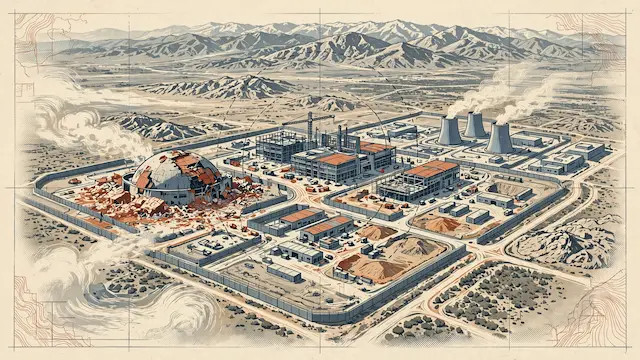
New satellite imagery indicates extensive renewed activity at the Min-Zada'i facility near Tehran, which Israel claims was used for Iran's nuclear weapons project and was targeted in a March strike. A report released Tuesday by the Institute for Science and International Security (ISIS) in Washington suggests this activity may signal an Iranian effort to re-establish its nuclear weapons development capability and rebuild what was lost in the attack.
According to the report, the March strike destroyed several above-ground structures and likely underground facilities at the site. Satellite photos from September and October show that the debris has been cleared, damage to a hillside has been repaired, and vehicle traffic has returned to normal. Excavation work continues in one of the bombed areas. The facility features an elevated platform where trees were planted years ago to disguise it as a courtyard, and which showed several craters after the attack. ISIS believes a subterranean, underground space exists beneath this platform.
From early September to early October, numerous vehicles were observed throughout the complex, with cars parked in a lot outside the fence and many private vehicles and trucks visible inside. The report states that the renewed effort at this highly secured facility implies that the work being done there is a top priority.
In a statement on the day of the strike, the IDF stated that the facility "operated the Iranian terror regime to develop capabilities required for nuclear weapons." The IDF further claimed that during Operation "Am K'lavia," it targeted numerous sites of the "Iranian nuclear weapons group, subordinate to Iran's Ministry of Defense," and that despite severe damage, the regime "did not stop its military nuclear activity and continued to develop the required capabilities for nuclear weapons, transferring infrastructure to an underground site immune to aerial attack."
The IDF also reported that a group of nuclear scientists secretly operated within the site to develop a key component of the nuclear weapon system, and that Aman (IDF Directorate of Military Intelligence) located their new base, enabling a precise strike. The IDF asserted that the attack "denies a core component of Iran's ability to develop nuclear weapons" and joins a series of vital strikes to remove the Iranian nuclear threat during Operation "Am K'lavia."
The same event, reported separately by each outlet. Open a few to compare what different newsrooms emphasize — and what they leave out.
Centre 3Right 1Haredi 1Arab 1






Not the same event — other stories that share this one’s people, places, or theme: background, reactions, and follow-ups.