
Palestinian PM Outlines New Economic Strategy Amidst War Devastation
Translated & summarized from Panet by baba
Palestinian Prime Minister Mohammed Mustafa announced a new strategy to rebuild the Palestinian economy, citing 74,000 deaths and $73 billion in reconstruction costs due to the war. He also highlighted a 30% economic decline, 50% unemployment, and 18 months of withheld tax revenues.
The story in 5 lines · by baba
- Palestinian PM announces new economic rebuilding strategy.
- War in Gaza caused 74,000 deaths and $73 billion in damage.
- Palestinian economy declined 30%, unemployment reached 50%.
- Over $22 billion in tax revenues withheld by Israel.
- PM stresses private sector leadership and international support.
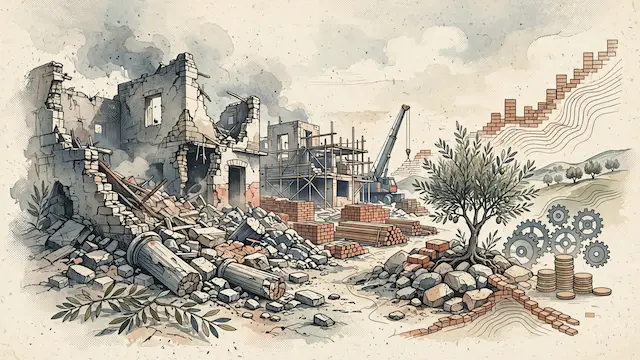
Palestinian Prime Minister Mohammed Mustafa stated that the "decisive battle" declared by Israeli leaders remains ongoing, with Palestinians experiencing its daily consequences. He highlighted that the "war crimes in the Gaza Strip have claimed the lives of 74,000 Palestinians and left behind destruction requiring approximately $73 billion for reconstruction." Mustafa made these remarks on Saturday in Hebron during the opening of the Palestine Construction Industries Exhibition. He noted that the "war on the national economy has caused its value to decline by about 30%, returning it to the level it was 15 years ago, in addition to unemployment rates rising to around 50%."
Regarding financial "piracy," Mustafa reported that "the occupation has confiscated and withheld over 22 billion shekels of Palestinian tax revenues, limiting the government's ability to provide essential services to citizens." He pointed out that these funds have not been transferred for 18 months. Despite these challenges, Mustafa affirmed that the past years have not weakened the Palestinian people's resolve, attributing this resilience to the collective will of the people, leadership, and various societal components.
Mustafa emphasized that "steadfastness alone is not enough," stressing the need to prepare for a new phase of rebuilding a Palestinian national economy. He called for leadership from the private sector, with support and empowerment from the government, and backing from regional and international partners.