
New Fast Lane Hub Opens in Rishon LeZion, Connecting to Tel Aviv
Translated & summarized from Ynet by baba
The story in 5 lines · by baba
- New transport hub in Rishon LeZion opens Sunday for Tel Aviv commuters.
- Complex includes parking, EV charging, and free electric shuttles.
- Shuttles bypass traffic on dedicated lanes to four Tel Aviv locations.
- Project criticized for lack of connection to existing public transport.
- Private cars to use fast lanes with dynamic tolls starting 2027.
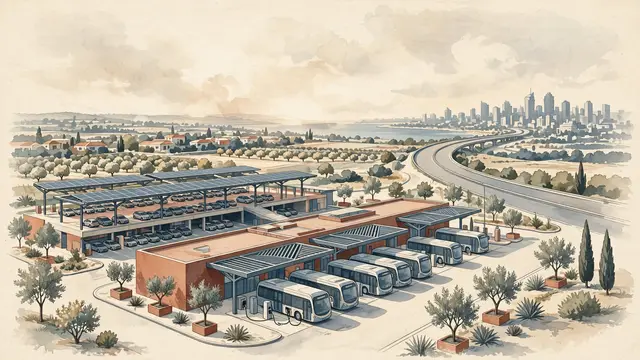
A new transportation complex in western Rishon LeZion, part of the "Fast Lane" project, is set to open this Sunday, aiming to shorten commute times to Tel Aviv. The complex features a 3,500-space parking lot, 350 electric vehicle charging stations, and 500 bicycle parking spots. From this hub, four free electric shuttle lines will operate on dedicated lanes, bypassing traffic congestion to reach employment and entertainment centers in Tel Aviv. These shuttles will serve four key points in Tel Aviv: the Kirya, Sarona, and Azrieli area (line 861); the Stock Exchange complex and Savidor Station (line 862); Begin and HaMesger (line 863); and Yigal Alon Street (line 864). The shuttles will run Sunday to Thursday from 6:00 AM to 10:45 PM, with frequencies of every five minutes during peak hours and every 15 minutes otherwise.
The project, a joint initiative by the Ministry of Transportation, Ministry of Finance, and Netivei Ayalon, promises time savings but faces criticism for its lack of integration with public transportation. Similar to a previously opened complex in Shefayim, the Rishon LeZion hub is not located near a train station and lacks access to local or regional bus routes. This means individuals without private vehicles or bicycles cannot utilize the shuttle service. Despite requests to the National Public Transport Authority to establish feeder lines, no progress has been made.
The first phase of the overall NIS 8 billion project opened in Shefayim last April. Initial ridership was low, but has since grown to approximately 10,000 daily passengers. Currently, only the free shuttles and public transport are permitted on the fast lanes, though some vehicles face delays due to lane dividers. Starting in the first quarter of 2027, private vehicles will be allowed access for a dynamic toll, ranging from NIS 7 during off-peak hours to NIS 105 during heavy congestion. Entry for private cars will be blocked if traffic slows below a certain threshold to maintain shuttle and public transport speed. Further expansion in 2027 will include allowing three-plus person vehicles access toll-free, alongside reversible lanes managed based on traffic flow.
Read the original at YnetMentioned


