
Israel's Education System Faces Overcrowding and Teacher Exodus, OECD Report Reveals
Translated & summarized from Mako by baba
An OECD report reveals Israel's education system suffers from overcrowded classrooms and high teacher turnover, with per-student spending lagging behind developed nations despite a large education budget. The country faces a projected 16% increase in its student population over the next decade.
The story in 5 lines · by baba
- Israeli classrooms are significantly more crowded than the OECD average.
- 77% of teachers leaving the profession have under five years of experience.
- Per-student spending in Israel is below the OECD average.
- Israel's student population is expected to grow by 16% in the next decade.
- A high percentage of teachers lack full certification in some schools.
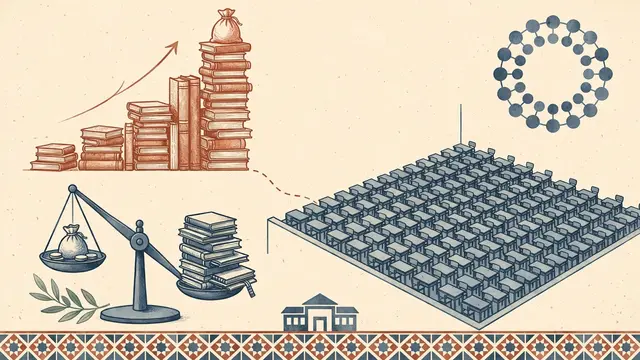
A new report from the Organization for Economic Co-operation and Development (OECD) highlights significant disparities between Israel's education system and those of other developed nations. The report indicates that Israeli classrooms are considerably more crowded than the OECD average, with 27 students per elementary school class compared to 21, and 30 students in middle school classes versus an OECD average of 23. Chile is the only country with more crowded classrooms than Israel.
The report also points to a severe issue with retaining young teachers, noting that 77% of those who leave the profession have less than five years of experience, a stark contrast to the OECD average of 38%. Despite this, a majority of Israeli middle school teachers (30.1%) feel their profession is valued, and about 33.9% are satisfied with their salaries, figures comparable to the OECD average.
While Israel allocates a substantial portion of its national budget to education, the high demographic growth rate means per-student spending falls below the OECD average. Government spending per student in Israel is approximately $11,000 annually, significantly lower than the $14,000 to $16,000 spent in many Western European countries. Higher education spending per student is even lower, at about $7,300, less than half the OECD average.
Furthermore, the report notes that 46% of elementary school students attend schools where over 10% of the teaching staff lacks full certification, with Jerusalem district reporting 18.1% uncertified teachers. Looking ahead, Israel's student population aged five to 14 is projected to grow by 16% over the next decade, while most OECD countries anticipate a decline.
Keep up with
Mentioned
The same event, reported separately by each outlet. Open a few to compare what different newsrooms emphasize — and what they leave out.
Left 1Centre 5Right 2Other 2










Not the same event — other stories that share this one’s people, places, or theme: background, reactions, and follow-ups.
