
Netherlands Reverses Stance on Israel Relations Amid Political Turmoil
Translated & summarized from Maariv by baba
The Netherlands has adopted a significantly tougher stance on Israel, imposing trade bans and sanctions, while also distinguishing between the Israeli government and the state itself. This policy shift follows internal political changes and ongoing debates about the country's approach to the Israeli-Palestinian conflict.
The story in 5 lines · by baba
- Netherlands imposes trade bans and sanctions on Israel.
- Dutch government distinguishes between Israeli government and state.
- New policy supports Palestinian state and opposes settlement expansion.
- Geert Wilders' influence contrasts with current government's actions.
- Internal Dutch political divisions impact Israel policy.
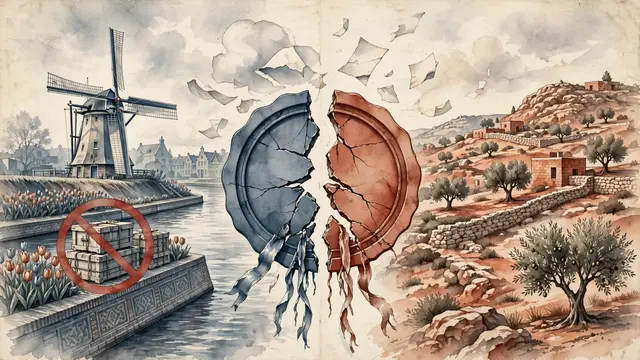
The Netherlands has significantly shifted its policy towards Israel, implementing sweeping trade bans, imposing humiliating security checks on El Al passengers in Amsterdam, and enacting direct sanctions against associates of Prime Minister Netanyahu. This dramatic change follows the collapse of the Dutch government and the rise of Geert Wilders, whose coalition agreement in January 2026 stipulated maintaining sanctions against the Netanyahu government until significant steps toward peace and international law are taken. The agreement also committed the government to resuming cooperation with UNRWA, opposing settlement expansion, and supporting Gaza's reconstruction.
Despite these measures, the Dutch government, led by Prime Minister Dick Schoof and Foreign Minister Tom de Bruijn, maintains it distinguishes between the Netanyahu government and the state of Israel. They support a Palestinian state alongside a secure Israel, condemn Hamas's October 7th attack, and demand the group's disarmament and exclusion from Gaza's future governance. Official recognition of a Palestinian state, they argue, should be part of an agreed-upon political process.
This policy shift contrasts with Geert Wilders' past rhetoric, which included accusations against the Moroccan community and calls for deportations. The current government, however, emphasizes combating racism and antisemitism and fostering cooperation with Jewish and Muslim communities. Simultaneously, they are pursuing stricter immigration policies, including reducing asylum seekers and increasing oversight of religious figures inciting hatred.
While Wilders, who has met with Netanyahu and visited settlements, continues to express support for Israel, he currently holds no governmental power. Internal divisions persist within the Netherlands, with some within the D66 party criticizing the government for not applying sufficient pressure on Israel, as evidenced by a protest that interrupted a recent speech by Prime Minister Schoof.
Mentioned
The same event, reported separately by each outlet. Open a few to compare what different newsrooms emphasize — and what they leave out.
Centre 2Right 1Haredi 1Arab 1Other 1






Not the same event — other stories that share this one’s people, places, or theme: background, reactions, and follow-ups.
