
Iran Rebuilds Nuclear Site Amid US President Trump's War Decision
Translated & summarized from Vesty by baba
Satellite images reveal Iran is rebuilding the Taleqan-2 nuclear facility, previously targeted by Israel. Meanwhile, U.S. President Donald Trump is reportedly contemplating intensified military action against Iran, facing a critical decision on the conflict's future.
The story in 5 lines · by baba
- Iran is rebuilding the Taleqan-2 nuclear facility after Israeli airstrikes.
- New satellite images show extensive reconstruction and concealment efforts.
- President Trump is considering a decision on escalating military action against Iran.
- The conflict over the Strait of Hormuz has driven up global oil prices.
- Trump has previously vowed a swift end to the war.
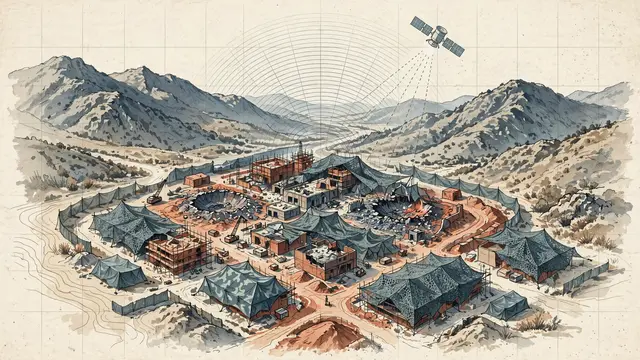
Satellite images released on Thursday, September 17, indicate that Iran is continuing to rebuild the Taleqan-2 nuclear facility, which was previously targeted by the Israeli Air Force during Operation "Lion's Roar." These new images supplement earlier satellite data from July, which already suggested extensive reconstruction efforts at the site. Concurrently, U.S. officials reported that President Donald Trump faces a "critical decision" regarding the ongoing conflict with Iran.
The September 13 satellite imagery, captured by Vantor, shows a large tent erected over the damaged facility, likely to conceal ongoing restoration work. The Institute for Science and International Security (ISIS), a Washington-based think tank monitoring Iran's nuclear program, noted "significant activity" around the construction area, including heavy machinery like bulldozers and concrete trucks. Reconstruction reportedly began in June, with initial efforts focused on repairing damage from bunker-buster munitions. ISIS researchers also believe a concrete protective structure has been completed on the right side of the facility to guard against aerial attacks.
In mid-July, CNN published exclusive satellite images indicating Iran's nuclear facility reconstruction, which appeared to contradict a then-active memorandum of understanding. ISIS analysis of those images and other materials concluded that "significant" rebuilding was underway at Taleqan-2, located within the Parchin military complex. Israel has struck Taleqan-2 twice, in March and October 2024, asserting that Iran was developing nuclear weapons technology there. The Israeli military stated in March that the site had been used for developing advanced explosives and conducting sensitive tests for the "Amad" project, a secret nuclear weapons program from the 2000s. The now-defunct Iran-U.S. understanding stipulated Iran would not acquire or develop nuclear weapons and would maintain its program's status quo.
Meanwhile, Axios reported on September 17 that President Trump is considering a return to intensified military action against Iran ahead of meetings with Gulf leaders at the UN General Assembly. "I have a decision to make. Do I want to destroy them? Anything can happen," Trump told the publication, indicating he would consult with allied Middle Eastern leaders on whether to continue or end the war.
The conflict, centered on control of the Strait of Hormuz, has led to repeated attacks by Iran on neighboring states and a rise in global oil prices, with oil reaching $100 per barrel for the first time since July. Trump previously stated the war would end before or shortly after the U.S. midterm elections in November, suggesting it has impacted his popularity due to rising living costs. At a rally, Trump claimed Iran had "called" and pleaded for a deal, but added, "I don't think they are ready yet." He reiterated promises that the war would end quickly, leading to a sharp drop in prices, and defended current fuel price increases as a small cost for achieving war aims.
Mentioned
The same event, reported separately by each outlet. Open a few to compare what different newsrooms emphasize — and what they leave out.
Centre 3Right 1Haredi 3Other 5












Not the same event — other stories that share this one’s people, places, or theme: background, reactions, and follow-ups.
