
Saudi Arabia Seeks Regional Aid, Indirectly Approaches Israel Over Houthi Threats
Translated & summarized from i24NEWS Arabic by baba
Saudi Arabia is seeking regional and indirect Israeli support to counter Houthi threats to vital shipping lanes, including the Bab al-Mandab strait. The Kingdom is facing pressure on multiple export routes and has reportedly not received a direct military response from the U.S.
The story in 5 lines · by baba
- Saudi Arabia seeks regional aid and indirect Israeli intelligence support.
- Houthi threats endanger Saudi oil exports via Bab al-Mandab and Hormuz.
- U.S. military intervention has reportedly not been granted.
- Gulf states are engaging Iran to ease navigation risks.
- Riyadh faces a complex challenge balancing alliances and regional threats.
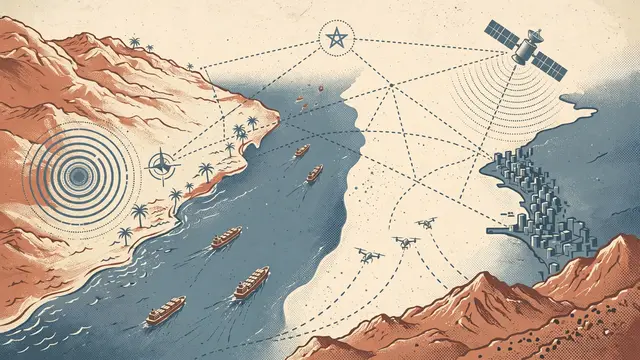
Saudi Arabia is actively seeking regional support to counter Houthi threats, particularly concerning vital oil export routes. According to regional diplomatic officials cited by Israel Hayom, Crown Prince Mohammed bin Salman has directly requested assistance from Gulf states and Egypt. Indirect contacts have also been made with Israel, facilitated by the U.S. Central Command (CENTCOM), to obtain intelligence and other support aimed at preventing the Houthis from disrupting navigation in the Bab al-Mandab strait.
The Kingdom faces an unprecedented challenge as three critical oil export routes are simultaneously threatened: the Strait of Hormuz to the east, the Bab al-Mandab to the south, and a land route to the Red Sea. Meanwhile, an upcoming meeting in Oman between Gulf foreign ministers and Iran's Foreign Minister Abbas Araghchi is part of efforts by Oman and Iran to reach temporary arrangements to ease navigation through the Strait of Hormuz. For Gulf states, this engagement reflects increasing pressure and a need to mitigate navigation risks rather than a rapprochement with Tehran.
Even if an understanding is reached regarding Hormuz, the problem of potential disruptions by Iran and the Houthis in Bab al-Mandab will persist. Saudi Arabia's request for U.S. military assistance to counter the Houthis and secure the Bab al-Mandab has reportedly gone unanswered by President Donald Trump, adding to the pressure on Riyadh.
The U.S. stance is perceived as concerning by Saudi Arabia, especially given threats from multiple fronts and simultaneous pressure on its vital export routes. The Gulf states' engagement with Iran also sends a message to Washington, indicating that while they are not aligning with Iran, they cannot indefinitely await U.S. action. If the U.S. does not provide a solution, regional nations may be compelled to pursue their own partial and temporary arrangements with Tehran, despite potential risks.
Saudi Arabia and other Gulf nations are thus navigating a complex situation: confronting Houthi threats in Bab al-Mandab, ensuring freedom of navigation in Hormuz, and seeking allied support, primarily from the U.S., without becoming entangled in broader understandings with Iran.
Mentioned








