
Nissan Revives Pixo Name for New Electric City Car
Translated & summarized from Sport5 by baba
Nissan is reviving the Pixo name for a new electric city car, set to be unveiled on September 23rd. Based on the Renault Twingo Electric platform, the car is expected to offer a compact design and a range of 263 km, with pricing being a key factor for its success in markets like Israel.
The story in 5 lines · by baba
- Nissan will launch a new electric city car named Pixo on September 23rd.
- The new Pixo is based on the Renault Twingo Electric platform.
- It is expected to have 82 hp and a 27.5 kWh battery with a 263 km range.
- The Pixo name was previously used for a Nissan-Suzuki collaboration model (2008-2013).
- Its success in Israel will depend on its price point.
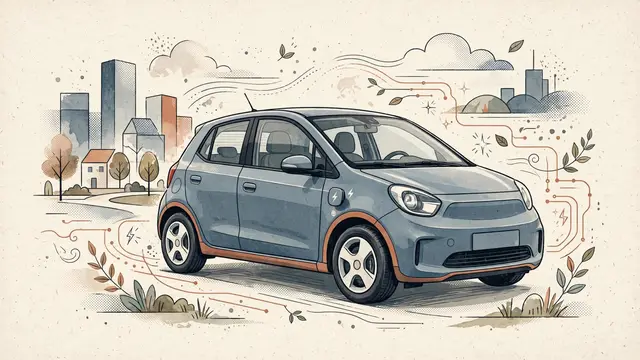
Nissan is set to unveil a new electric city car on September 23rd, reviving the Pixo nameplate. This upcoming model is expected to serve as a spiritual successor to the compact and affordable Nissan Micra, a popular vehicle in Israel known for its durability, good resale value, reliability, fuel efficiency, and strong air conditioning. The original Nissan Pixo was produced from 2008 to 2013 in collaboration with Suzuki, based on the Alto model.
The new electric Pixo will be manufactured in France at Renault's factories, sharing its platform with the Renault Twingo Electric. This means the Pixo will essentially be a rebadged version of the Twingo Electric, positioned below the recently introduced electric Micra (which is based on the Renault 5 E-Tech).
While full specifications will be released later this month, it is anticipated that the Pixo will share dimensions with the Twingo Electric, measuring 3.79 meters long, 1.72 meters wide, and 1.49 meters high, with a wheelbase of 2.49 meters and a trunk capacity of 305 liters. The powertrain is also expected to be similar, featuring front-wheel drive with 82 horsepower, a 0-100 km/h acceleration time of 12.1 seconds, and a modest 27.5 kWh battery offering a range of 263 kilometers.
This new electric Pixo enters a growing segment of small electric vehicles, with potential competition in Israel from models like the Leapmotor T03 and Dongfeng Box. The article suggests that such urban-focused electric cars have a place in the Israeli market, particularly for city dwellers, but their success will ultimately depend on their pricing.

