Israeli Documentary Exposes AI-Driven Killing System in Gaza
Translated & summarized from Arab48 by baba
An Israeli documentary, "NAZA," premiered at the Venice Film Festival, exposing the Israeli military's alleged use of AI-powered systems like "Lavender" to identify targets and authorize killings in Gaza, with testimonies from former soldiers detailing the process and its impact on civilians.
The story in 5 lines · by baba
- Israeli documentary "NAZA" reveals AI targeting systems in Gaza.
- Film features anonymous testimonies from Israeli military personnel.
- AI systems like "Lavender" identified Palestinians for assassination.
- Documentary highlights permissible civilian casualties and extensive surveillance.
- The film received a strong reception at the Venice Film Festival.
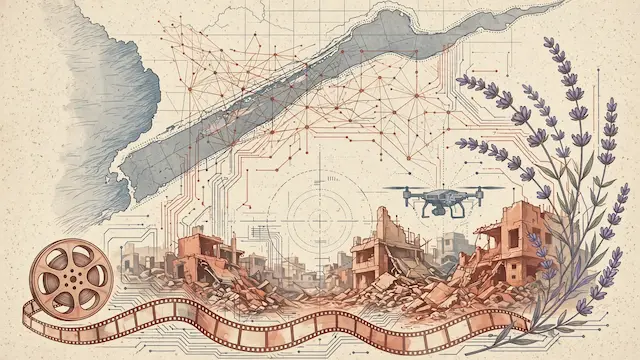
An Israeli documentary, "NAZA," premiered at the Venice Film Festival, detailing the Israeli military's use of artificial intelligence in identifying bombing targets in the Gaza Strip. The film, directed by Yuval Abraham and Rachel Szor, is based on a three-year investigation and testimonies from 24 individuals who served in Israeli military or intelligence units, speaking anonymously. The documentary presents internal accounts of the targeting system, explaining how Palestinians were identified for assassination, the permissible levels of civilian harm, and the extensive use of surveillance in Gaza.
Abraham stated that the filmmakers aimed to allow soldiers and officers to describe their involvement, illustrating the mechanisms of the killing systems in Gaza. The film's title, "NAZA," is an Israeli intelligence term reportedly used to denote the expected number of civilian casualties in an airstrike. Testimonies reveal that some targets were identified through AI analyzing vast datasets, with the results then leading to bombings in densely populated civilian areas.
The 80-minute film focuses on the "Lavender" system, which participants claim was used to classify individuals in Gaza as assassination targets based on data from extensive surveillance of communications, movement, and personal relationships. One participant described the process as industrial-scale, akin to a "factory," while another likened the remote operations to a video game. The film includes accounts of how simple indicators, such as a child's phone indicating a family member's presence at home, could contribute to an airstrike decision.
According to Abraham, the targeting systems were designed to strike individuals in civilian areas and among their families, with acceptable civilian casualty margins sometimes allowing for the destruction of entire neighborhoods. The testimonies also address the destruction of civilian homes, disregard for international humanitarian law, and a hostile attitude towards Palestinians within some military units. The film highlights instances where Palestinians were killed in areas designated as forbidden by the Israeli military without clear notification, including near aid distribution points, with residents reportedly learning about these zones only after casualties occurred.
The documentary emerges amidst the ongoing war in Gaza, which began after the October 7th Hamas attack on Israel. The Gaza Ministry of Health reports approximately 73,500 Palestinians killed and 174,500 injured, figures deemed reliable by the UN. Israel claims it does not intentionally target civilians and that Hamas operates among the population. However, "NAZA's" testimonies challenge these justifications by presenting internal Israeli military accounts of systems designed to target individuals within homes and civilian areas, revealing a high degree of automation in targeting decisions.
"NAZA" received a strong reception at the Venice Film Festival, with critics calling it urgent and shocking, and noting the anger and disgust it evoked regarding Israeli government policies. The film's standing ovation reportedly surpassed that of a previous film about the Palestinian child Hind Rajab, who was killed by Israeli forces. Directors Abraham and Szor previously won an Oscar for "No Other Land," a film documenting settler violence and Palestinian displacement in the West Bank.
Mentioned