
Israel Debates Fuel Price Cut Amid Election Buzz and Global Oil Surge
Translated & summarized from Al-Shams by baba
Israel is considering lowering gasoline prices amid rising global oil costs and upcoming elections, facing internal opposition and legal challenges. Meanwhile, the Bank of Israel is weighing interest rate decisions influenced by energy prices and US monetary policy.
The story in 5 lines · by baba
- Israel debates lowering fuel prices ahead of elections amid global oil price hikes.
- Economist warns of increased transport and production costs due to rising oil prices.
- Potential legal and financial obstacles exist for the proposed fuel price reduction.
- Bank of Israel's interest rate decision is influenced by energy costs and US policy.
- Economist predicts Bank of Israel may hold rates or cut by a quarter point.
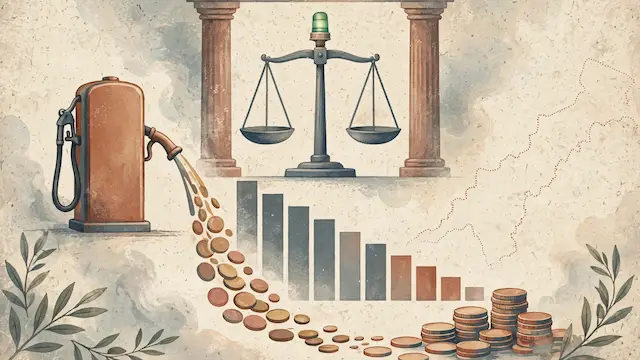
Efforts to lower gasoline prices in Israel are underway, coinciding with a global rise in oil prices, sparking debate over the motivations behind the move and its potential link to the upcoming elections. Economist Abdul Qader Marai, director of Future Company within the Phoenix Group, noted that attempts to reduce fuel costs might face opposition from the Ministry of Finance and encounter legal hurdles. He warned that rising global oil prices could significantly increase transportation and production costs, impacting the prices of various goods.
Marai elaborated that the impact of higher oil prices extends beyond gasoline, affecting a broad spectrum of production and transportation expenses. The movement of goods from production sites to markets relies heavily on transportation methods sensitive to energy costs. He cautioned that recent oil price hikes, coupled with energy supply disruptions, could lead to further price increases for goods, despite a recent limited rise in the cost of living index.
Regarding the Finance Minister's initiative to lower gasoline prices, Marai pointed out internal opposition within the ministry due to potential increases in state expenditures and legal complications in implementing such a measure before elections. He suggested the move could be perceived as an electoral tactic to boost voter turnout, especially with elections approaching. However, he stressed that the primary driver remains the global surge in oil prices and its direct and indirect economic consequences.
Marai explained that even a seemingly small increase in gasoline prices contributes to a chain of costs borne by traders, producers, and transport companies, ultimately affecting consumers through higher shipping and transport expenses. This effect is not confined to the domestic market, as elevated global energy prices increase the cost of shipping goods internationally, adding further pressure on commodity prices.
Concerning the Bank of Israel's interest rate decision, Marai identified rising energy prices and the cost of living as key factors, alongside anticipated developments in US monetary policy. While current economic indicators might permit an interest rate cut, he indicated that changes in the US Federal Reserve's policy could influence the Bank of Israel's decision, particularly concerning currency exchange rate stability. A rate cut could also stimulate the sluggish housing market, but external factors, especially US monetary policy, are likely to be the most influential at this juncture.
Marai anticipates that the Bank of Israel will either maintain the current interest rate or reduce it by a quarter percentage point. He acknowledged the possibility of a cut but suggested that external developments, particularly decisions by the US Federal Reserve, might prompt the Israeli bank to exercise caution. He concluded that the Bank of Israel's long-term policy direction favors lowering interest rates, but the pace and frequency of such reductions will depend on both local and global economic trends.
Mentioned
The same event, reported separately by each outlet. Open a few to compare what different newsrooms emphasize — and what they leave out.
Left 1Centre 5Right 3Haredi 2Arab 5Other 6























Not the same event — other stories that share this one’s people, places, or theme: background, reactions, and follow-ups.