Finance Ministry Legal Advisor Backs Fuel Tax Cut Amid Election Concerns
Translated & summarized from Calcalist by baba
Israel's Finance Ministry legal advisor, Dudi Kofel, supports a temporary fuel tax cut despite election period restrictions and professional opposition, citing precedent and urgency. The proposed reduction aims to lower gasoline prices by NIS 0.50 per liter for two months, costing the state NIS 310 million.
The story in 6 lines · by baba
- Finance Ministry legal advisor backs fuel tax cut during election period.
- The proposed cut would reduce gasoline prices by NIS 0.50 per liter.
- The measure is expected to cost the state NIS 310 million in lost revenue.
- Legal challenges exist due to election period restrictions on government actions.
- Precedent from previous election periods and global practices are cited.
- Professional bodies within the Finance Ministry oppose the tax reduction.
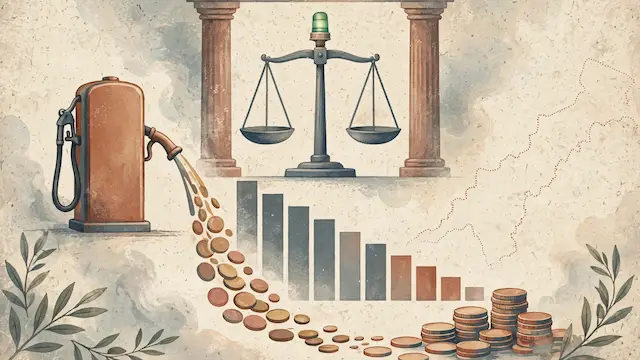
The legal advisor to Israel's Finance Ministry, Dudi Kofel, believes the government should be allowed to reduce fuel excise taxes by 50 agorot (cents) per liter, despite legal challenges related to the ongoing election period. This reduction would lower the price of gasoline to NIS 7.75 per liter from the current NIS 8.25. The measure, expected to last two months, would cost the state approximately NIS 310 million in lost revenue. The funding for this cut comes from revenue surpluses generated by Finance Minister Bezalel Smotrich's failure to expand VAT exemptions on international online purchases.
The primary legal obstacle stems from guidelines stating that governments in election periods must exercise restraint in their powers, particularly for non-urgent matters. Since this fuel tax cut is opposed by professional bodies within the Finance Ministry, including the Chief Economist, Budget Division, and Tax Authority, it is suspected of being an election-related maneuver lacking legal justification.
However, Kofel argues that such reductions, even when professionally opposed, have been implemented by other governments globally and by Israel's previous government. He specifically points to the 2022 election period when the then-Attorney General permitted the then-Finance Minister, Avigdor Lieberman, to implement a further fuel tax reduction. While acknowledging economic and legal distinctions between 2022 and the current period, Kofel maintains that allowing the cut this time is appropriate.
Key differences include the timing of the 2022 reductions, which began before the Knesset's dissolution announcement, making them part of the government's pre-election policy. This creates a paradox where a government disregarding professional advice before elections might be permitted to do so during elections. Economically, Israel's fiscal situation in 2022 was stronger, with a budget surplus and lower public debt, unlike the current situation with high public debt and significant budget adjustments. Furthermore, the 2022 cut had an anti-inflationary rationale due to high inflation, whereas current inflation is low, making fuel price increases less likely to trigger broader inflation.
Despite these counterarguments, Kofel decided to permit the reduction, deeming it urgent due to the current price increase and noting it will conclude by the end of October, thus not constraining the next government. He also appears to want to avoid a public perception of unfairness between different governments. Kofel's position requires approval from the Attorney General and specifically from Avital Sompolinsky, the Deputy Attorney General for Public-Constitutional Affairs.
Mentioned
The same event, reported separately by each outlet. Open a few to compare what different newsrooms emphasize — and what they leave out.
Left 1Centre 5Right 3Haredi 2Arab 5Other 6