
Finance Minister Smotrich Criticized for Handling of Fuel Price Hike
Translated & summarized from Walla by baba
Israel faces a record fuel price hike due to an automatic mechanism, prompting Finance Minister Smotrich to propose a tax reduction. The move is criticized as a reactive, potentially politically motivated measure amidst broader governmental failures in managing the economy and cost of living.
The story in 5 lines · by baba
- Fuel prices in Israel will reach an all-time high at midnight.
- Finance Minister Smotrich's tax cut proposal is seen as a reactive, possibly illegal, measure.
- The government is criticized for lacking vision and proactive economic management.
- Prime Minister Netanyahu pressured Smotrich to address the fuel price increase.
- The incident highlights broader governmental dysfunction and neglect of public welfare.
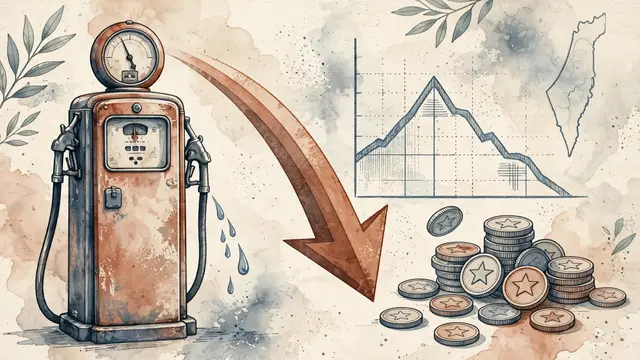
Israel is set to experience a record-high fuel price at midnight, matching the 2012 peak. While the government is not directly blamed for this increase, which is driven by an automatic mechanism, the situation highlights broader governmental failures in managing the cost of living. The article criticizes the current coalition for lacking the vision and capability to reduce reliance on fossil fuels, despite Israel's advancements in natural gas and alternative energy research.
Finance Minister Bezalel Smotrich's recent initiative to reduce fuel excise taxes to mitigate the price surge is presented as a reactive measure, potentially bordering on election bribery. This move, reportedly pressured by Prime Minister Benjamin Netanyahu, aims to address public anger over rising costs, a key issue in Netanyahu's past election campaigns. The article suggests that Smotrich's late action, similar to a previous tax reduction by former Finance Minister Avigdor Lieberman, is a response to political pressure rather than proactive governance.
The author argues that both Netanyahu and Smotrich have been preoccupied with internal political maneuvering, including Likud primaries and coalition stability, neglecting their core responsibilities. A hypothetical proactive meeting between the two to discuss the fuel price increase weeks in advance is contrasted with their current reactive approach, which is seen as indicative of flawed decision-making processes and a lack of genuine concern for citizens' financial well-being.
This handling of the fuel price hike is framed as a symptom of the government's overall dysfunction, extending to other sectors like education, transportation, and social welfare. The article points to a pattern of failures, including the delayed response to the northern conflict and the lack of solutions for those whose homes were damaged over a year ago, suggesting a systemic issue of poor management and a focus on coalition finances over public welfare.









