not everywhere· Politics· Updated
Israeli Opposition Weighs Direct PM Vote to End Political Stalemate
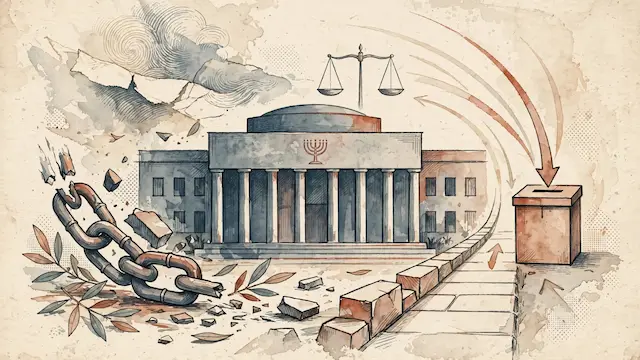
Following the inconclusive Knesset election on Tuesday, October 27, 2026, senior figures in Israel's opposition "change bloc" are considering a legislative push to reinstate direct elections for prime minister. The proposal, dubbed the "Netanyahu 2021 model," aims to break the political deadlock and allow the formation of a government without relying on the support of Arab parties.
6 newsrooms · 3 languages · since




What happened
- 01Israel's opposition bloc is considering direct prime ministerial elections to resolve the political deadlock following the October 27 election.
- 02The proposal, known as the "Netanyahu 2021 model," would allow citizens to vote directly for the premier without dissolving the Knesset.
- 03The election left Netanyahu's bloc with 53 seats, the opposition with 48, and Arab parties with 19, leaving no bloc with a clear majority.
- 04The opposition aims to use the direct vote to form a government without relying on support from Arab parties.
- 05Implementing the direct election system would require significant legislative amendments to Israel's Basic Law: The Government.
- 06The opposition is also discussing a potential two-term limit for prime ministers, which could prevent Netanyahu from seeking re-election.
- 07Israel previously utilized a direct prime ministerial election system from 1996 to 2001 before abandoning it due to political fragmentation.
The current political landscape leaves neither bloc with a clear majority to form a government. Prime Minister Benjamin Netanyahu's bloc holds 53 seats, the opposition bloc holds 48, and Arab parties hold 19. Although the opposition bloc and Arab parties collectively hold 67 seats in the 120-member Knesset, internal disagreements have hindered coalition building. Opposition leaders like Naftali Bennett and Avigdor Lieberman refuse to rely on Arab parties, while Yair Golan of the Democratic Party is open to the idea.
Under the proposed direct election model, which Netanyahu himself suggested in 2021, the public would vote directly for the prime minister without dissolving the Knesset. The winner would automatically be empowered to form a government, potentially a minority one, bypassing the need for a 61-seat parliamentary majority. The opposition is also reportedly considering advancing legislation to limit a prime minister's tenure to two terms, which could prevent Netanyahu from running.
Implementing this change would require significant legislative amendments to Israel's Basic Law: The Government. Israel previously used a direct election system between 1996 and 2001, which saw victories for Benjamin Netanyahu, Ehud Barak, and Ariel Sharon, before it was abandoned due to political fragmentation. The proposal remains one of several options under discussion, alongside holding new general elections or forming a national unity government with Netanyahu.
Summarized by baba from the reports of 6 newsrooms. Updated
Latest report: The Times of Israel. Read The Times of Israel’s originalThe coverage
6 newsrooms on this story
Who covered it
- LeftNone
- Centre2
- Right1
- HarediNone
- Arab2
- Other1

Not in the Left or Haredi press
How it broke
How the headlines differ
Israeli Opposition Weighs Direct PM Vote to End Political Stalemate


