
Jackals Are Losing Their Fear of People, Experts Warn
A growing jackal presence in populated areas has led to a weekend attack near the Sea of Galilee that left 11 people bitten. Dr. Amit Dolev said easy access to garbage is driving the animals closer to humans, while rabies remains a serious concern. He urged the public not to approach jackals and called on municipalities to use animal-proof bins.
הידיעה ב-5 שורות · תקציר של baba
- 11 vacationers were bitten by jackals at the Sea of Galilee.
- Jackals are increasingly entering cities and resorts for food.
- Dr. Amit Dolev warned that fearless behavior can signal rabies.
- Authorities are urged to use animal-proof trash bins.
- People should not approach jackals or leave food outside bins.
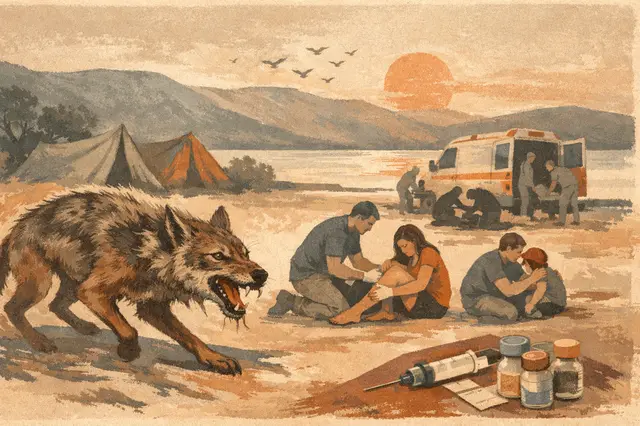
Jackals have been appearing more often in populated areas across Israel in recent years, drawn by easy food in garbage bins and moving closer to people. A weekend incident at the Sea of Galilee ended with 11 vacationers being bitten by jackals.
Dr. Amit Dolev, the northern district ecologist for the Nature and Parks Authority, told ynet’s studio that a jackal approaching people is already a warning sign. He said such behavior may come from animals that have learned to rely on human food, but it could also indicate rabies, which can dramatically change an animal’s behavior.
Dolev said the main problem is the growing jackal population in some areas, including the Sea of Galilee region and Tel Aviv, where there is no natural boundary limiting their movement. “In practice, we are providing them with open restaurants,” he said, referring to exposed trash cans, small bins and garbage bags left beside them. He added that it is easier for jackals to feed on waste than hunt, and that as they get used to this food source, their fear of humans declines. In such conditions, he said, the population grows and density rises, making the danger greater if a rabid animal appears.
On rabies, Dolev said the phenomenon is cyclical and rises and falls over the years. In his doctoral research, he found that the spread sometimes comes from Lebanon, sometimes from Syria and sometimes from Jordan. He said the pattern is dynamic and recurring, “almost like waves in the sea,” and should not necessarily be tied to war or other specific events.
His advice to the public was clear: do not approach jackals, and if an animal does not fear you, “that is when you should start being afraid.” He also urged people to keep food out of and away from bins, and called on local authorities to install animal-proof trash containers to keep wildlife away from waste and reduce jackal numbers in urban areas.
אותו אירוע, כפי שכל מערכת דיווחה עליו בנפרד. פתחו כמה דיווחים כדי להשוות מה כל מערכת מדגישה, ומה היא משאירה בחוץ.
מרכז 5ימין 2חרדית 2אחרים 1










לא אותו אירוע: ידיעות אחרות שחולקות עם הידיעה הזו אנשים, מקומות או נושא. רקע, תגובות והמשכים.
