
Israel's Supreme Court Halts New Broadcasting Law, Cites Procedural Flaws
Israel's Supreme Court has frozen the implementation of the new Broadcasting Law and will hear petitions challenging it. The court cited alleged procedural flaws in the legislation and will convene an expanded panel of nine justices to discuss these issues. The government and other respondents must submit their explanations by January 7. Several media organizations and Members of Knesset have petitioned against the law, welcoming the court's decision.
הידיעה ב-5 שורות · תקציר של baba
- Supreme Court freezes new Broadcasting Law, citing procedural flaws in its passage.
- An expanded panel of nine justices will review the legislative process of the law.
- The government and other respondents must explain why the law should not be canceled.
- The court's decision halts the law's implementation until further judicial review.
- Media organizations and MKs have petitioned against the law, welcoming the freeze.
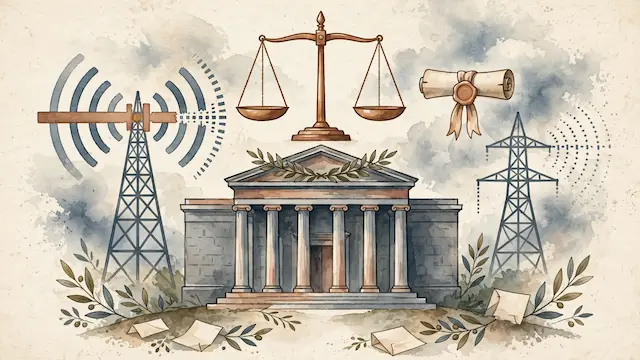
Israel's Supreme Court has issued an interim order freezing the implementation of the new Broadcasting Law until further notice. The court, led by Supreme Court President Yitzhak Amit and Justices Alex Stein and Yechiel Kasher, noted that the government had not submitted its response to requests for an interim order. Concurrently, the court issued a conditional order demanding that the respondents, including the government, the Ministry of Communications, and the Knesset, explain why the law should not be canceled due to alleged flaws in its legislative process. Responses are due by January 7.
The Supreme Court has decided to bifurcate the discussion of the petitions. Initially, the focus will be on the procedural irregularities in the legislation. Arguments concerning the substance of the law's provisions will be addressed separately at a later stage. Furthermore, the court has decided to convene an expanded panel of nine justices to hear the opposition to the conditional order, a decision indicating the gravity of the procedural concerns.
The Broadcasting Law has been challenged by numerous entities from the media industry, civil society, and the political sphere. Among the petitioners are Channel 12, the Journalists' Association, the Press Council, the "Success - For the Advancement of a Fair Society" association, the Movement for Quality of Government, "Zulat for Equality and Human Rights," and the "Academy for Democratic Israel." A separate joint petition was filed by Members of Knesset Efrat Rayten, Shelly Tal-Miron, Yorai Lahav-Hertzanu, and Eitan Ginzburg.
MK Shelly Tal-Miron hailed the court's decision as a "dramatic and significant step in our struggle for freedom of the press and democracy in Israel." She emphasized that the court's decision to freeze the law and consider the procedural flaws with an expanded panel of nine justices underscores the seriousness of the issues. "The road is still long and there is no room for premature celebrations, but this is a necessary stop sign," she stated, vowing to continue the fight for broadcast and media independence.
The Journalists' Association also welcomed the ruling, calling the interim order "an important step in defending democracy and freedom of the press." The organization reiterated its commitment to combating legislation that harms these principles and to ensuring journalists can operate freely.
מוזכרים
אותו אירוע, כפי שכל מערכת דיווחה עליו בנפרד. פתחו כמה דיווחים כדי להשוות מה כל מערכת מדגישה, ומה היא משאירה בחוץ.
שמאל 1מרכז 2ימין 2אחרים 2






