
Israeli Pollsters Widely Missed Election Results, Analysis Shows
Most Israeli pollsters inaccurately predicted the recent election results, forecasting a lead for Gadi Eisenkot's bloc while Benjamin Netanyahu's Likud ultimately emerged as the largest party. Discrepancies in polling methodologies, including sampling and data collection, along with the handling of undecided voters, are cited as reasons for the widespread errors. Historically, Israeli polls have faced similar challenges in accurately reflecting election outcomes. One firm, Direct Polls, provided a forecast closer to the actual results by emphasizing emotional voting patterns and the stability of voter blocs.
הידיעה ב-5 שורות · תקציר של baba
- Most Israeli polls incorrectly predicted the election outcome, underestimating Benjamin Netanyahu's bloc.
- Discrepancies in polling methodologies and data collection methods led to widespread inaccuracies.
- The handling of undecided voters, a significant portion of the electorate, contributed to miscalculations.
- Historically, Israeli pollsters have failed to accurately predict election results on multiple occasions.
- Direct Polls' methodology, focusing on emotional voting, provided a more accurate forecast.
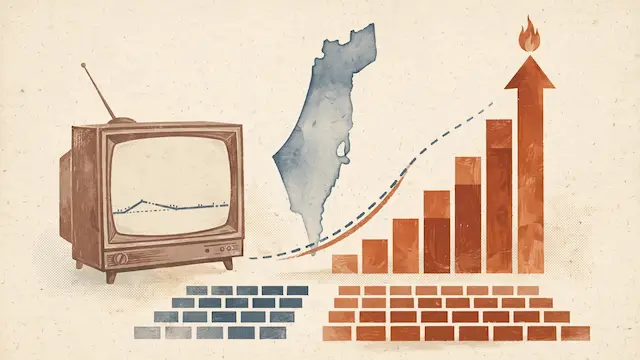
Leading up to the recent Israeli elections, most major polls predicted a significant lead for the bloc headed by Gadi Eisenkot of the Yisrael Beiteinu party, while Benjamin Netanyahu's Likud bloc was seen as weaker. This projection was further bolstered by online betting platforms and some media outlets. However, Channel 14 presented a contrasting view, forecasting an advantage for Netanyahu.
Following the vote count, it became apparent that the majority of pollsters had misjudged the outcome. Netanyahu's bloc secured approximately 53 seats, while Eisenkot's bloc garnered around 48. The Likud emerged as the largest party in the 26th Knesset. While final results are pending the count of double envelopes and soldier votes, the general trend indicates a significant error in most pre-election surveys.
Polls from Channel 16 (Ma'agar Mocheot) and i24NEWS were among the few that more accurately reflected the eventual results. Experts suggest that the wide discrepancies between different channels' polls stemmed from variations in their methodologies, including sampling techniques and data collection methods. Dr.
Further analysis points to the communication aspect, where media outlets often prioritize presenting seat allocations over nuanced percentages, potentially obscuring the proportion of undecided voters. Different collection methods, such as phone surveys versus online panels, also contribute to biases by reaching different segments of the population. Online surveys may underrepresent older or less digitally connected individuals, while phone surveys face declining response rates. Historically, Israeli polls have also missed election outcomes, notably in 1981, 1992, 1996, and most famously in 2015, when polls underestimated the Likud's strength.
Another significant challenge identified is the handling of undecided voters, who constitute a substantial portion of the electorate and can significantly influence the final results. Some analyses suggest that undecided voters, particularly those leaning towards right-wing parties, were not adequately accounted for in many polls. Tzuriel Sharon, owner of Direct Polls, offered a different perspective, predicting Netanyahu's bloc would secure at least 55 seats, arguing that voter shifts are minimal and elections are often driven by emotional and identity-based factors rather than rational calculations. His firm's exit poll, conducted with i24NEWS, proved to be the closest to the partial vote count.
מוזכרים
אותו אירוע, כפי שכל מערכת דיווחה עליו בנפרד. פתחו כמה דיווחים כדי להשוות מה כל מערכת מדגישה, ומה היא משאירה בחוץ.
מרכז 1ימין 1חרדית 1אחרים 1



לא אותו אירוע: ידיעות אחרות שחולקות עם הידיעה הזו אנשים, מקומות או נושא. רקע, תגובות והמשכים.



