
Nir Oz Kibbutz Debates Demolishing Homes Damaged in October 7th Massacre
Translated & summarized from Davar by baba
The Nir Oz kibbutz voted to demolish homes damaged in the October 7th massacre and build a memorial complex elsewhere, a decision now facing appeals and awaiting a High Court ruling. The vote followed extensive discussions and consultations, with some survivors advocating for preservation and others, like co-founder Ran Pauker, arguing for a fresh start away from the destruction. The kibbutz is also considering specific memorial solutions for sites of extreme tragedy, while a similar situation unfolds in Kibbutz Kfar Aza.
The story in 6 lines · by baba
- Nir Oz kibbutz members voted to demolish homes damaged in the October 7th massacre.
- Appeals are being considered, but the kibbutz leadership deems the demolition decision final.
- A petition to halt demolitions has gathered over 5,000 signatures.
- A memorial complex is planned outside the kibbutz for destroyed structures.
- The kibbutz awaits a High Court of Justice ruling that could affect the demolition plan.
- Co-founder Ran Pauker advocates for demolition to allow for a new, vibrant community.
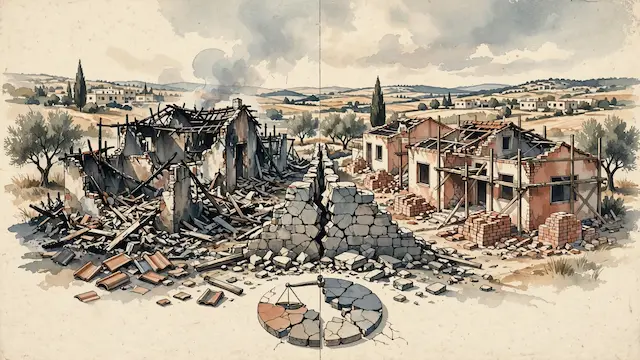
The Nir Oz kibbutz is set to review appeals against the decision to demolish homes damaged during the October 7th massacre. Despite the appeals, the kibbutz leadership maintains that the decision, passed by a 51-42 vote among members, is final, with only minor adjustments or specific compromises potentially being considered. The debate intensified following a social media post by hostage survivor Yarden Bibas, who requested to preserve his family's home. This led to a petition urging the state to intervene and halt demolitions until solutions are found for families wishing to keep their homes; it has garnered over 5,000 signatures.
Last Thursday, 95 kibbutz members voted on the future of the damaged structures after more than 18 months of discussions. The resolution, described as "heartbreaking," mandates the demolition of the homes and the establishment of a memorial complex outside the kibbutz, to which destroyed structures or parts thereof will be relocated. This approach was chosen partly due to the difficulty of relocating the buildings intact, given their location and construction. Alternative proposals included preserving a limited number of structures or symbolic items within the kibbutz, or a row of houses.
The kibbutz is also awaiting a High Court of Justice (Bagatz) ruling, which could impact the demolition plan. The kibbutz had 136 members before October 7th; over 40 have since been killed, died, or left. While the decision was made by members, the process involved professionals, dedicated teams, and consultations with residents, former residents, and bereaved families connected to the kibbutz.
This situation mirrors a similar case in Kibbutz Kfar Aza, where families have petitioned the High Court to prevent the demolition of their children's homes, following a similar kibbutz decision. Ran Pauker, a Nir Oz co-founder and advocate for demolition, stated, "We want a new kibbutz, full of life and happy children, not a cemetery." He criticized opposition to the plan, suggesting it's led by individuals not intending to return, and argued against living next to destroyed homes, comparing it to urban environments where damaged structures are removed. Pauker added that the demolition plan details are not final and could include specific solutions, such as creating memorial corners or not rebuilding on sites where entire families were murdered, like the Siman-Tov Kadam family.
Keep up with
Mentioned
The same event, reported separately by each outlet. Open a few to compare what different newsrooms emphasize — and what they leave out.
Left 1Right 1

Not the same event — other stories that share this one’s people, places, or theme: background, reactions, and follow-ups.



