International Tribunal Rejects Argentina's Bid to Halt Falklands Oil Project
Translated & summarized from Mignews by baba
The International Tribunal for the Law of the Sea rejected Argentina's request to halt the Sea Lion oil project near the Falkland Islands, a venture by British and Israeli companies. Argentina argued the project violated a UN resolution, but the tribunal cited sovereignty issues. The decision follows a historical conflict over the islands.
The story in 5 lines · by baba
- The International Tribunal for the Law of the Sea rejected Argentina's request to stop the Sea Lion oil project.
- The project is a joint venture between British company Rockhopper and Israeli company Navitas.
- Argentina claimed the project violated a UN resolution regarding unilateral actions in disputed territories.
- The tribunal cited the ongoing sovereignty dispute over the Falkland Islands as a reason for its decision.
- The ruling was made with 18 votes in favor and three against.
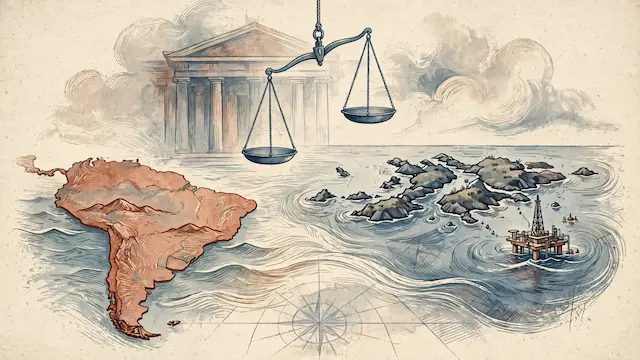
The International Tribunal for the Law of the Sea (ITLOS) has rejected Argentina's request to temporarily halt the Sea Lion oil project near the Falkland Islands. The project is being developed by British firm Rockhopper and Israeli company Navitas. The tribunal's decision was made with 18 votes in favor and three against.
Argentina had brought the case to the tribunal as part of its ongoing dispute with the United Kingdom over sovereignty of the archipelago. Buenos Aires argued that the oil exploration violated a UN resolution calling for parties to refrain from unilateral actions until the sovereignty dispute is resolved. Specifically, Argentina sought to prohibit new well drilling, infrastructure construction, and the use of resource exploration data in the disputed maritime areas.
In explaining the ruling, the tribunal's president stated that the court likely lacks grounds to consider Argentina's demands, as the dispute pertains to the sovereignty of the islands themselves. The conflict between Argentina and the UK over the Falkland Islands, which led to a war in 1982, resulted in the islands remaining under British control after a ten-week military engagement.
Keep up with
Mentioned
The same event, reported separately by each outlet. Open a few to compare what different newsrooms emphasize — and what they leave out.
Left 1Centre 2Arab 1Other 3






Not the same event — other stories that share this one’s people, places, or theme: background, reactions, and follow-ups.