US State Department Accuses Iran of Erasing Protest Victims
Translated & summarized from Cursorinfo by baba
The U.S. State Department accused Iran of attempting to erase the memory of thousands killed during January protests by burying victims in unmarked graves and blocking mourning ceremonies. Students at Sharif University honored nearly 40 women killed, risking their academic futures. Iranian authorities acknowledged over 3,000 deaths, blaming the U.S. and Israel, and have carried out death sentences.
The story in 5 lines · by baba
- U.S. State Department accuses Iran of erasing memory of thousands killed in January protests.
- Iranian authorities allegedly bury victims in unmarked graves and block mourning ceremonies.
- Sharif University students honored nearly 40 women killed, risking their academic careers.
- Iran's government admitted over 3,000 deaths, blaming U.S. and Israel for violence.
- Judicial bodies have carried out death sentences for protest-related offenses.
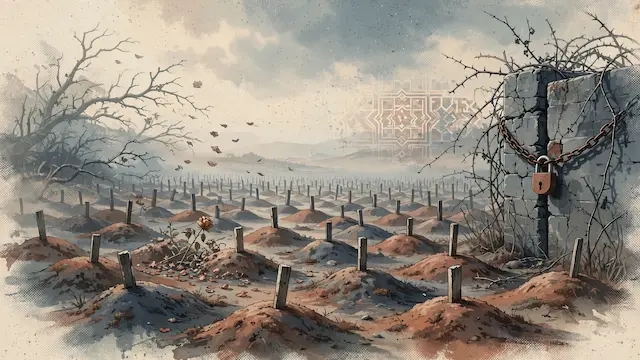
The U.S. State Department has accused the Iranian regime of attempting to erase the memory of thousands killed during recent protests. In a statement reported by Iran International, the State Department detailed how Iranian authorities are allegedly burying victims in unmarked graves and hindering families from holding mourning ceremonies. "The Iranian regime is trying to erase from history the names of thousands of Iranians, men, women, and children, it killed during the January protests," the statement read.
The State Department also voiced support for students at Tehran's Sharif University of Technology who honored the memory of women killed in the protests, despite risks to their safety and academic careers. According to the State Department, students displayed approximately 200 portraits of nearly 40 women on campus, risking expulsion.
The protest movement began in late December 2025, initially fueled by discontent over the rising cost of living, but evolved into nationwide anti-government demonstrations peaking on January 8-9. Protesters increasingly directed their demands at Iran's leadership. Iranian authorities later acknowledged over 3,000 deaths, blaming the violence on "terrorist actions" allegedly orchestrated by the U.S. and Israel. Judicial bodies have carried out death sentences related to the protests, including for men convicted of attacking police and setting fire to government buildings.
Keep up with
Mentioned
The same event, reported separately by each outlet. Open a few to compare what different newsrooms emphasize — and what they leave out.
Centre 1Other 1