
Hostage Yarden Bibas Pleads to Save His Destroyed Home in Kibbutz Nir Oz
Translated & summarized from Vesty by baba
Former hostage Yarden Bibas is pleading with Kibbutz Nir Oz to reverse its decision to demolish his family's home, which was damaged on October 7th. The kibbutz voted to dismantle the structure, rejecting a proposal to preserve it as a memorial to his wife and two sons, who were killed in Hamas captivity. Bibas's sister-in-law also urged the community to preserve the home as a testament to their lost loved ones. The decision echoes a similar vote in Kibbutz Kfar Aza, which led to a petition to the Supreme Court.
The story in 6 lines · by baba
- Yarden Bibas, a former hostage, is demanding Kibbutz Nir Oz reconsider demolishing his family's home.
- The kibbutz voted to demolish homes damaged on October 7th, including Bibas's house, for reconstruction.
- Bibas's wife and two sons were killed in Hamas captivity; his home holds his last memories of them.
- An alternative proposal to preserve Bibas's home as a memorial was rejected by kibbutz members.
- Bibas's sister-in-law supports preserving the home, arguing restoration should not erase memory.
- Two houses in the row have already been demolished, with Bibas's home also slated for destruction.
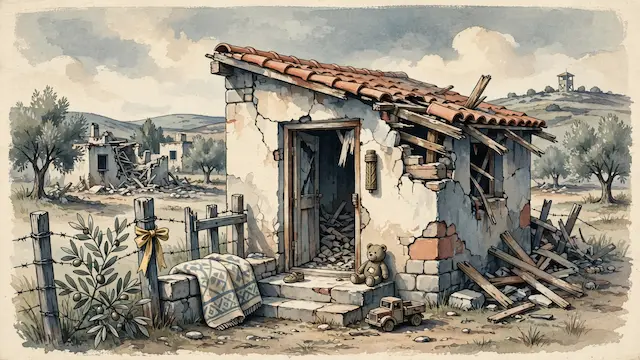
Yarden Bibas, a former hostage released by Hamas, has publicly appealed to the Kibbutz Nir Oz community to reconsider its decision to demolish homes damaged during the October 7th massacre, including his own. The kibbutz voted 38-32 to dismantle the structures, opting against an alternative proposal that would have preserved Bibas's home as a memorial.
Bibas expressed deep anguish over the decision, stating, "This decision causes me agonizing pain and destroys me. I demand to stop and reconsider it." He emphasized that his home holds the last tangible memories of his wife, Shiri, and their young sons, Kfir and Ariel, who were killed in captivity. He described the house as the place where his children took their first steps and learned to crawl, and where his dog, Toni, protected them. "This house holds the memory of my life before October 7th and of the family I lost. It is the only place I have left of them!" he wrote.
Bibas argued that demolishing the house would be akin to Hamas's attempt to erase their existence, stating, "I cannot accept that in the name of restoration and development, we will destroy with our own hands what little remains, the memory of our former life and the evidence of what happened." He believes it is possible to build a future without obliterating the past.
Dana Silverman, Shiri Bibas's sister, echoed these sentiments, urging the kibbutz to preserve homes that serve as testaments to past lives, families, and love. She questioned why restoration must come at the expense of memory, stating, "Restoration is not destruction. Revival is not oblivion." Silverman also suggested that decisions about the kibbutz's heritage should involve all those affected by the October 7th events, not just the current kibbutz members.
Two of the four houses in Bibas's row have already been demolished. His home and a neighboring house are slated for demolition under the kibbutz's decision. The rejected alternative plan included preserving Bibas's home and potentially creating a "Superhero Center" memorializing all the children killed in Nir Oz. This situation mirrors a similar debate in Kibbutz Kfar Aza, where residents also voted to demolish damaged homes for a memorial complex, prompting a petition to Israel's Supreme Court.
Keep up with
Mentioned
The same event, reported separately by each outlet. Open a few to compare what different newsrooms emphasize — and what they leave out.
Centre 3Other 2




Not the same event — other stories that share this one’s people, places, or theme: background, reactions, and follow-ups.


