
Netanyahu Prepared to Accept Second Spot in Rotation Deal
Translated & summarized from Channel 13 by baba
Prime Minister Benjamin Netanyahu is reportedly preparing to accept the second position in a rotation deal with "Yashar" party chairman Gadi Eisenkot. Eisenkot, however, remains skeptical of Netanyahu's intentions and plans to form his own government next week. The Likud party accused Eisenkot of negotiating a "left-wing government" simultaneously but stated their commitment to a unity government remains.
The story in 6 lines · by baba
- Benjamin Netanyahu is reportedly ready to be second in a rotation deal with Gadi Eisenkot.
- Gadi Eisenkot plans to form his own government next week, expressing skepticism about Netanyahu.
- Senior "change bloc" figures say Bennett will vote against Eisenkot's government if talks with Netanyahu fail.
- Eisenkot accuses Likud of stalling negotiations and avoiding concrete proposals for two weeks.
- Likud accuses Eisenkot of negotiating a "left-wing government" while discussing unity.
- Despite disputes, Likud states its hand is extended for a unity government.
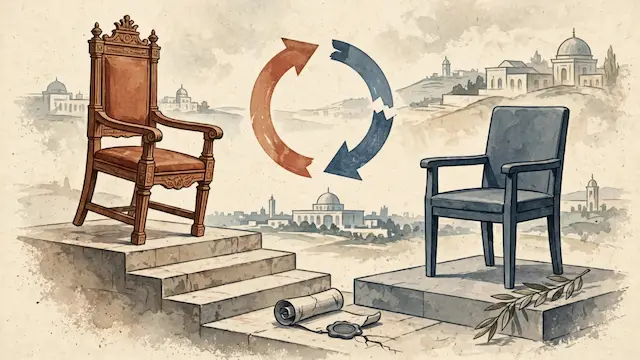
Prime Minister Benjamin Netanyahu is reportedly preparing to announce his willingness to be the second in a rotation agreement with Gadi Eisenkot, chairman of the "Yashar" party, according to sources in the Prime Minister's Office. These sources indicated that opinions are divided within Netanyahu's circle regarding the potential implications of such a move.
Meanwhile, Eisenkot expressed significant skepticism about Netanyahu's proposals and continues to plan for swearing in a government next week. Senior figures in the "change bloc" stated that if Eisenkot forms a government before exhausting talks with Netanyahu, Bennett intends to vote against it.
Just before Shabbat, Eisenkot released a statement addressing the negotiations between his party's representatives and the Likud. He claimed the Likud refused to schedule frequent meetings and was not acting in good faith, having avoided presenting concrete proposals for two weeks. Eisenkot asserted that the Likud's actions suggest a desire to stall rather than pursue unity and partnership.
Eisenkot further stated that the current moment is a turning point, determining whether the Likud seeks serious negotiations and compromise for a partnership, or merely a pretense of talks to delay. He reiterated that his door remains open if they change their approach, emphasizing that true unity involves shared values and direction, not just the distribution of roles.
The Likud party responded by accusing Eisenkot of deception, claiming he was simultaneously negotiating for a unity government while arranging a "dangerous left-wing government" and legitimizing cooperation with "terror supporters." Despite these accusations, the Likud affirmed their commitment to a unity government and pledged to do everything possible to achieve it, citing the challenges facing the Israeli people.
Keep up with
Mentioned




